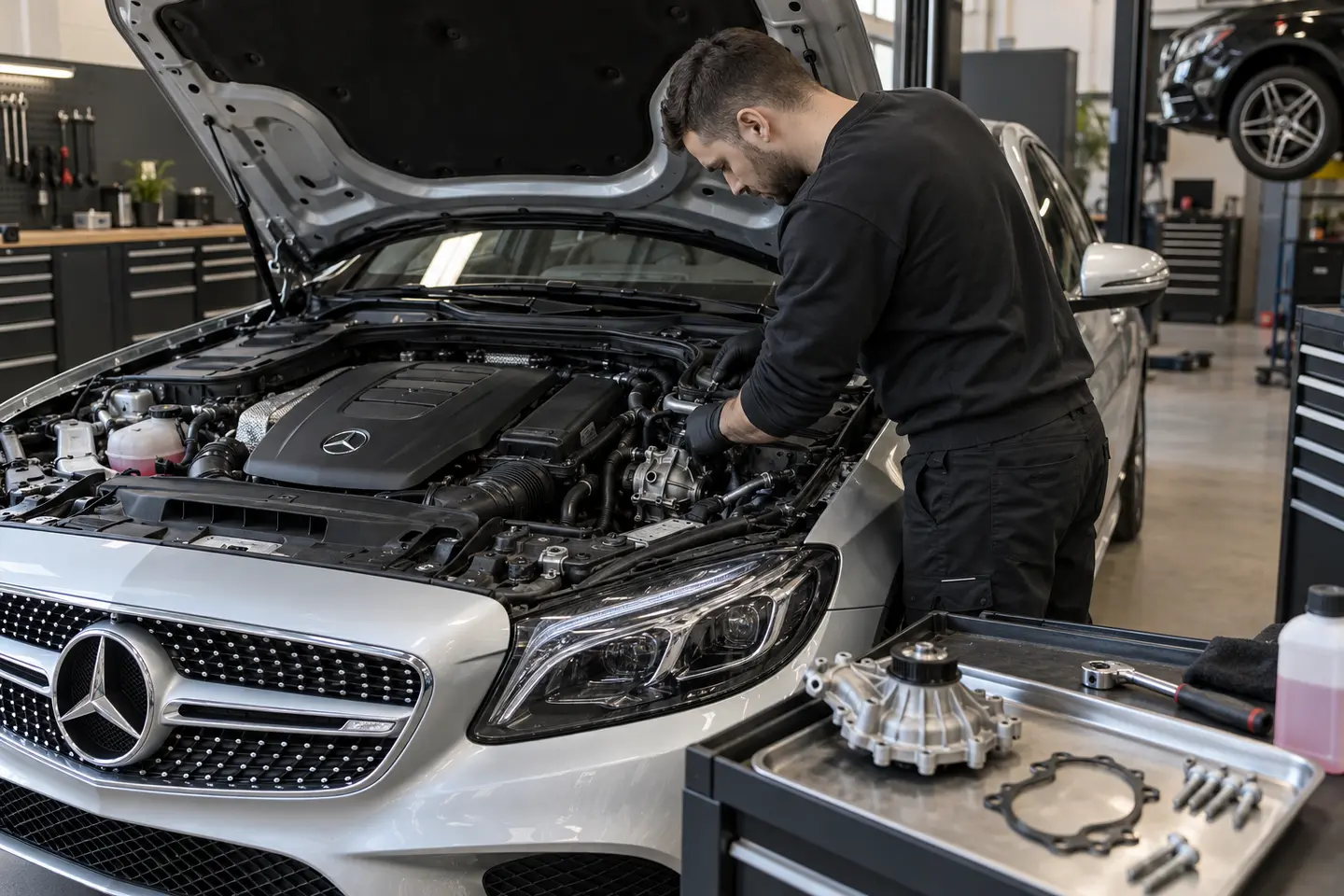
Can I drive with a suspected water pump fault?
Do not drive if the temperature is rising, coolant is pouring out, steam is present, or a red temperature warning appears. Stop safely, switch off, and arrange recovery. A small trace leak still needs prompt diagnosis because its loss rate can change.
Does a coolant leak prove the water pump is bad?
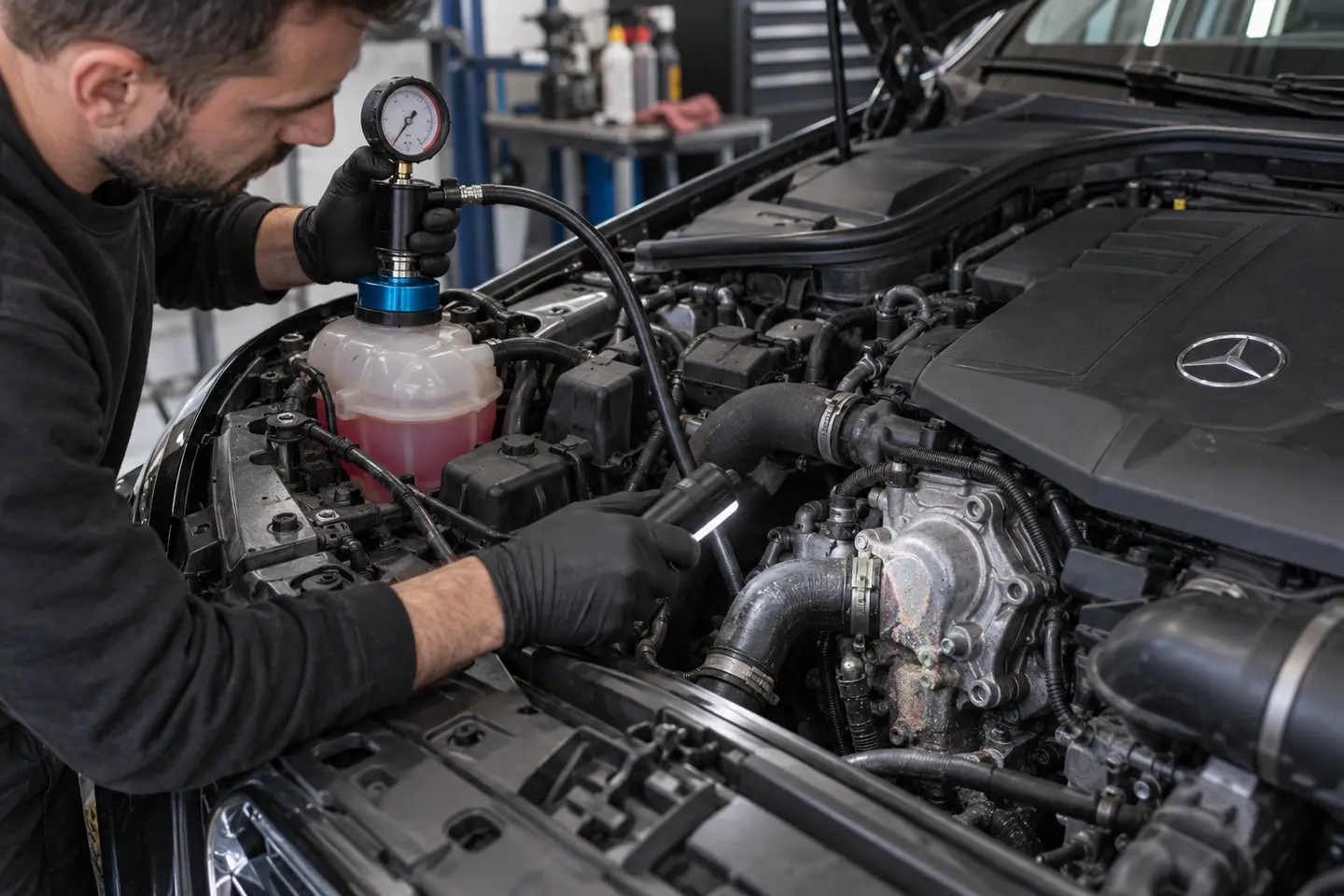
No. Hoses, the expansion tank or cap, thermostat housing, radiator, connectors, turbo cooling lines, and internal engine leaks can produce similar loss. The pump area and the complete circuit should be checked cold before parts are ordered.
Does the quoted range include VAT?
Yes. Each planning row includes the listed part or work, normal labour and seals, specified coolant, and 5% VAT. Related parts, recovery, and damage caused by overheating are separate unless written into the final estimate.
Should the thermostat be replaced with the water pump?
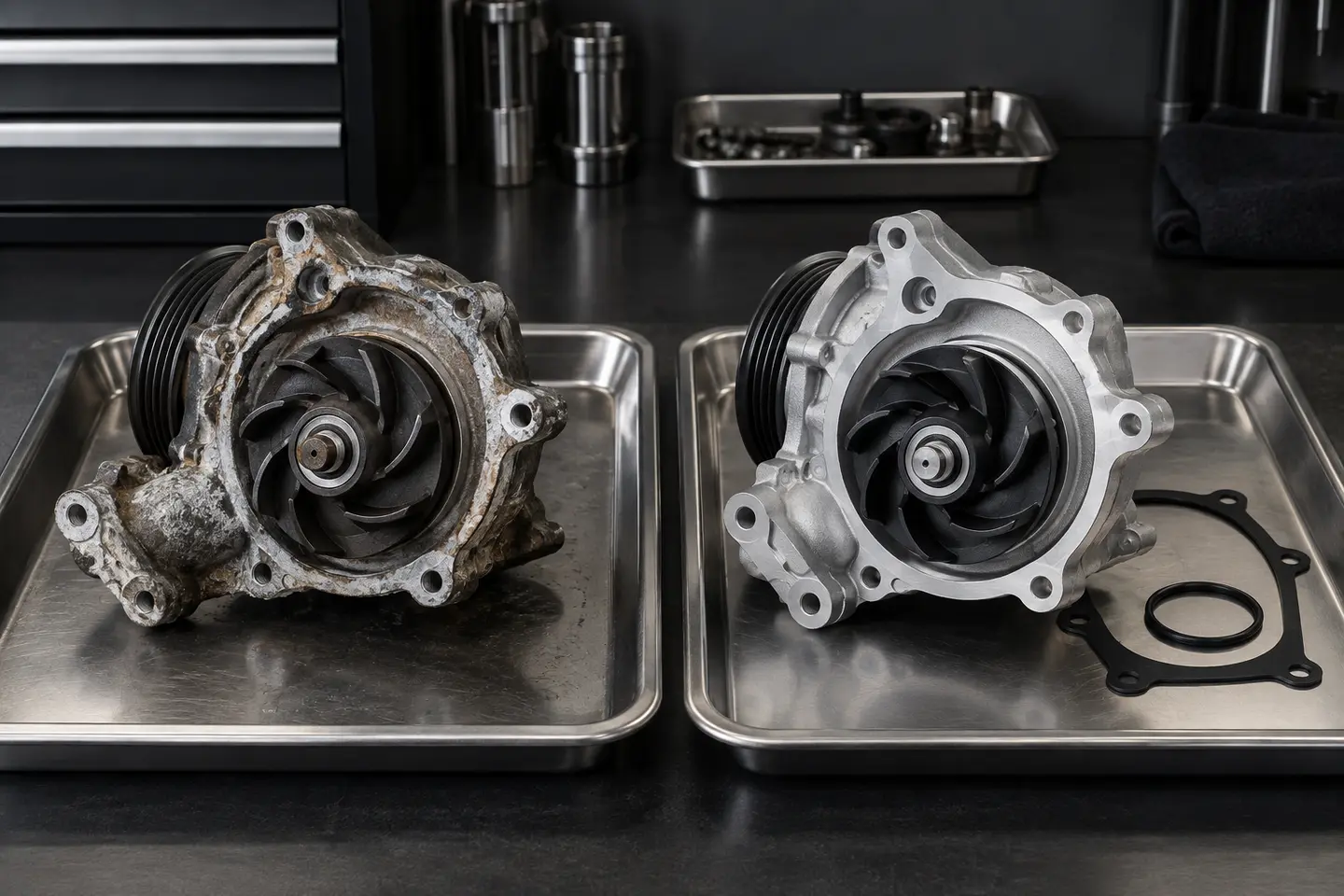
Sometimes, especially when it is integrated, shows a fault, has shared access, or its history and condition make the added work sensible. It should not be added automatically. We show it separately unless the pump assembly includes it.
How long does water pump replacement take?
Access varies widely between four, six, and eight-cylinder engines and between mechanical and electric pumps. Part availability and cooling-system cleanup also matter. We give an arrival and collection plan after identifying the pump and confirming the scope.
What coolant will be used?
The coolant is selected for the vehicle specification and existing system condition, not by colour alone. Mixing incompatible fluids or topping up with a universal product can create deposits or reduce protection, so the existing coolant is considered before refill.
What is checked after the new pump is fitted?
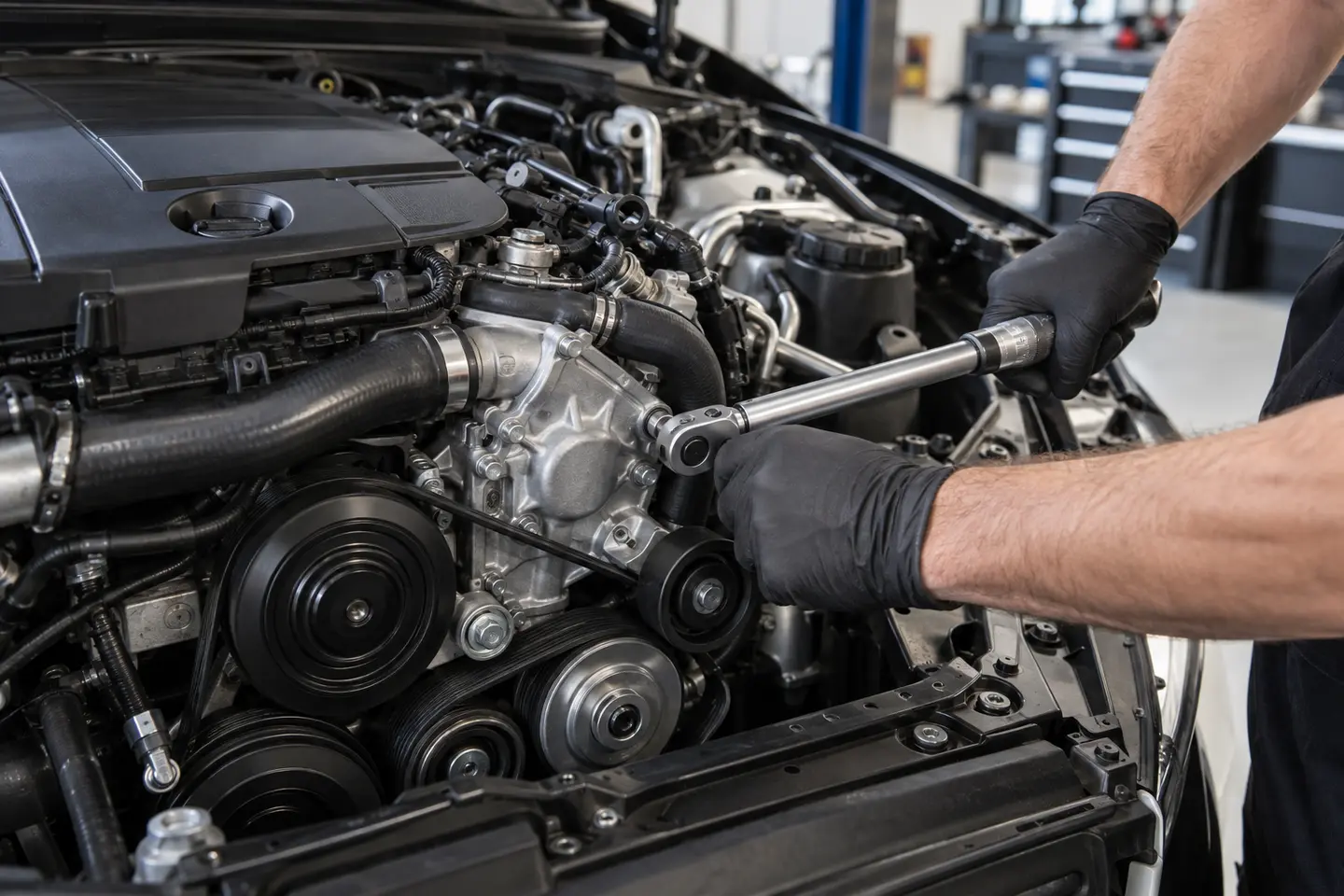
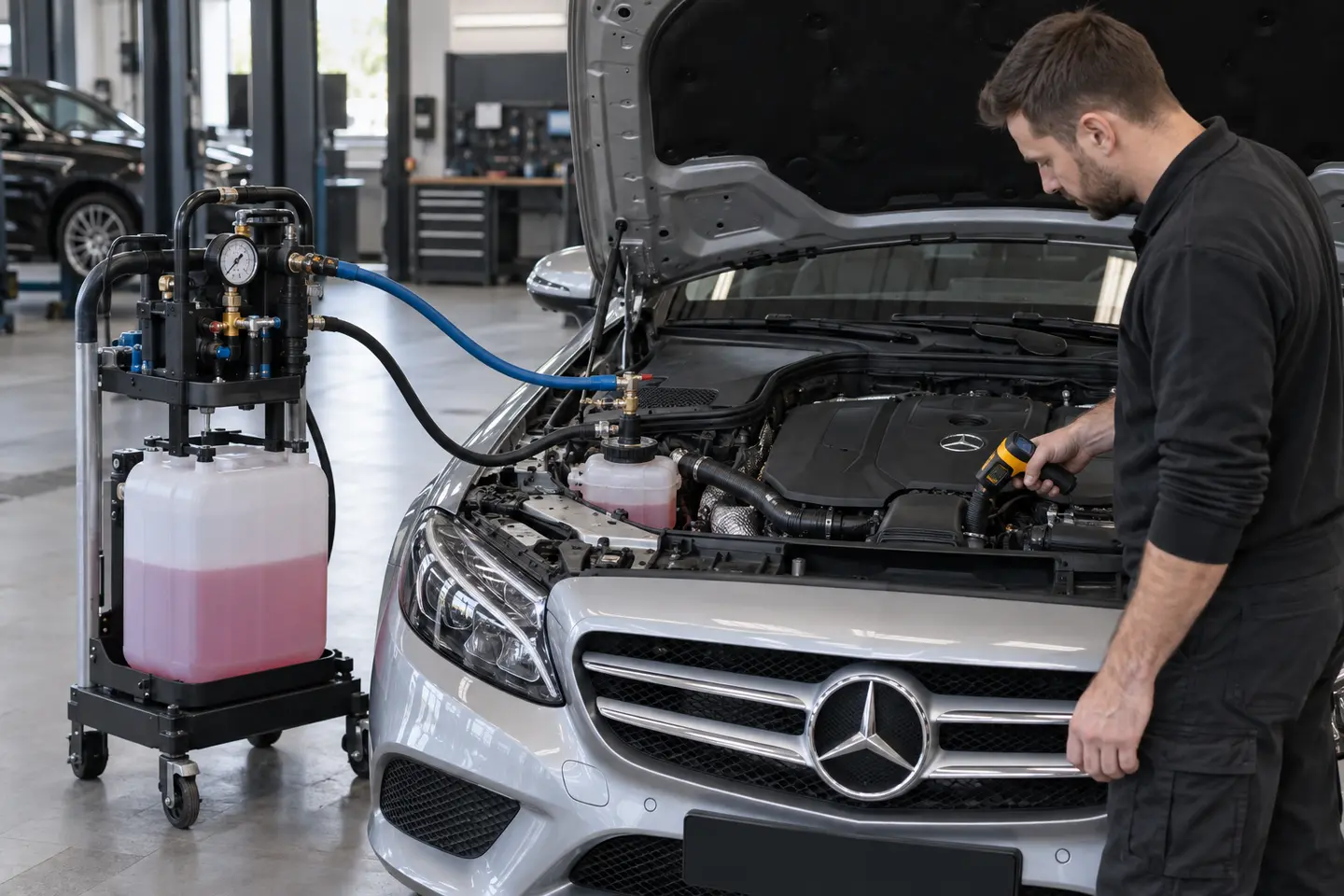
We inspect for leaks, restore and bleed the coolant, monitor temperature and circulation, check heater output and fan response, review warnings or fault memory where relevant, and recheck the repaired area before handover.