
9G-Tronic diagnosis · 725.0
Mercedes 9G-Tronic Problems: Harsh Shifts and Diagnostic Checks
A harsh shift does not identify a failed gearbox. The exact transmission, operating condition, control data, engine torque and driveline response must be separated before any repair is approved.
Mercedes-Benz 9G-Tronic transmission problems can cause a firm shift, an RPM flare between gears, delayed engagement, shudder, jolting or a transmission warning, but those symptoms do not automatically mean the 725.0 gearbox needs rebuilding or replacement. A shift is coordinated through engine torque, voltage and control signals, hydraulic pressure, internal clutch operation and the driveline. A fault in any one of those areas can change what the driver feels.
The useful first step is to record exactly when the behaviour occurs, identify the installed transmission and preserve the original fault and adaptation data. Clearing codes, resetting adaptations or ordering a valve body before that evidence is captured can make an intermittent complaint harder to diagnose.
Start with the exact unit
9G-Tronic is the Mercedes-Benz name associated with a family of nine-speed automatic transmissions. Mercedes technical guidance identifies the 725.0 as NAG3 Classic, but the name alone does not confirm the complete unit number, software level, vehicle configuration, approved fluid or test procedure.
Confirm the VIN-linked vehicle data and the installed transmission before selecting parts or interpreting a generic repair guide. AMG, hybrid and all-wheel-drive applications can introduce different control units and test paths. A nine-speed display on the instrument cluster is not enough identification.
If the vehicle has the older 722.9 seven-speed transmission, compare the checks for Mercedes 7G-Tronic problems. The symptoms may sound similar, but the unit, fluid requirement and diagnostic procedure are different.
| Reference | What it establishes | What still needs checking |
|---|---|---|
| 9G-Tronic | The vehicle uses a Mercedes nine-speed automatic concept | The complete transmission variant, software, vehicle configuration and current repair information |
| 725.0 / NAG3 Classic | The core transmission family has been identified | The full unit number, VIN applicability, adaptations, approved fluid and linked control units |
| “Nine-speed gearbox” | Only the number of forward ratios | Whether the complaint belongs to the transmission, engine torque, mounts, transfer case or another driveline component |
Describe the shift precisely
“The gearbox jerks” is too broad to choose a test. The technician needs the exact gear change or manoeuvre, whether the car is cold or warm, the throttle position, road speed, engine speed and any warning shown at the same time. That description decides which live values and circuits should be recorded.
| What the driver notices | Useful first questions | What it does not prove |
|---|---|---|
| One firm upshift or downshift | Which change, at what temperature, load and road speed? | That a clutch pack, valve body or complete transmission has failed |
| RPM rises between gears | Does the requested gear match the actual response, and is slip recorded? | Whether the cause is hydraulic pressure, clutch wear or an incorrect control command |
| Delay selecting Drive or Reverse | Is the delay cold, hot or both, and does one direction take longer? | That a fluid service alone will restore normal engagement |
| Jolt under light throttle | Does it follow engine speed, vehicle speed or a change in driveline load? | That the sensation started inside the gearbox |
| Shudder at steady speed | Does it appear during converter lock-up, acceleration or a particular road speed? | That the torque converter is the only possible source |
| Warning or limited operation | Which message appeared, what gear remained available and what codes were stored? | Which component caused the control system to limit operation |
Harshness can start elsewhere
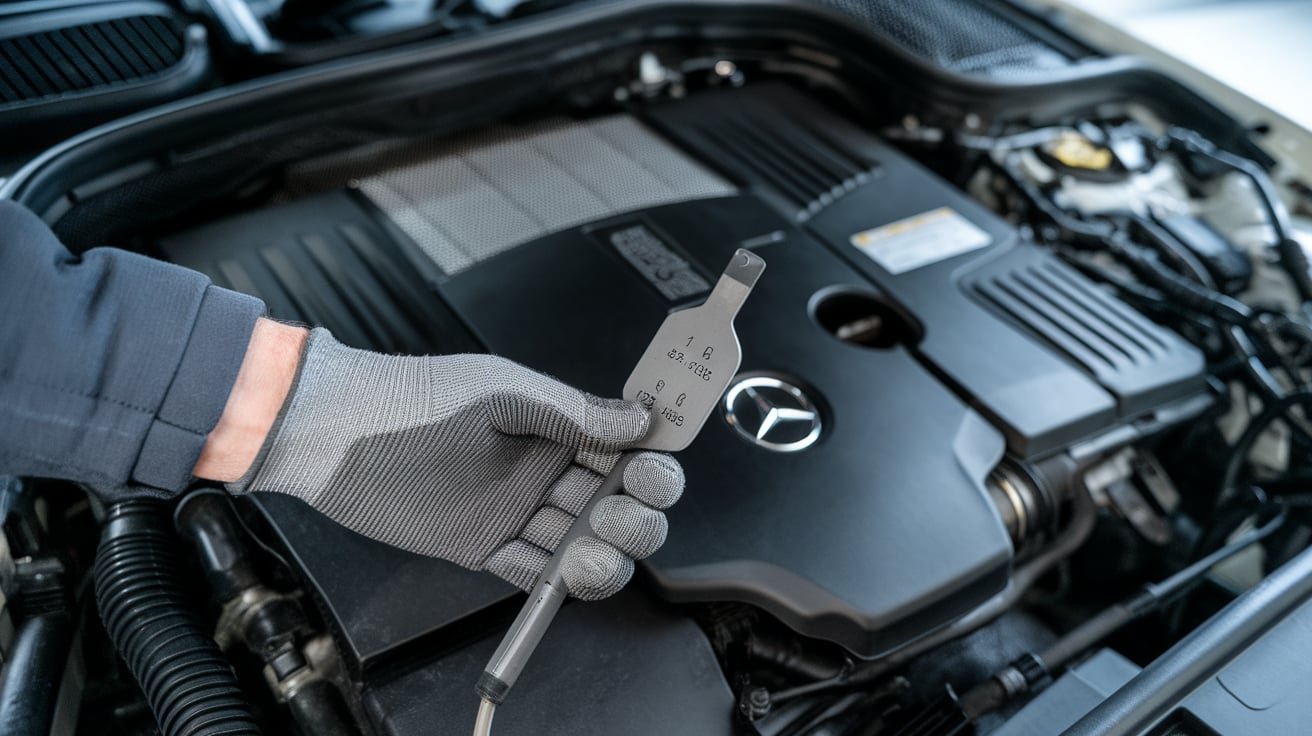
A shift event is not created by the transmission in isolation. The engine control system may reduce or restore torque during a change. The transmission control unit then manages solenoids and hydraulic pressure, the converter and clutch elements respond, and the mounts, propeller shaft, differential and transfer case transmit that response to the body.
An engine misfire, unstable torque signal or software issue can therefore feel like a transmission thump. Excessive movement in an engine or transmission mount can exaggerate a normal torque change. Play or binding in the driveline can create a jolt when load changes even if the commanded shift is correct.
Mercedes-Benz documented one vehicle-specific 725.0 case in which an occasional rough 3–2 downshift under braking was attributed to engine software and addressed through engine and transmission software work followed by adaptation. That example does not apply to every car. It shows why the engine side of the shift must be checked before a mechanical gearbox repair is assumed.
Mercedes also issued a separate diagnostic path for light-load vibration or jolting on vehicles fitted with a variable transfer case. The bulletin directs technicians to review engine, transmission and all-wheel-drive control data before isolating the transfer case. A driver can feel the event as a “bad shift” even when the first cause is elsewhere in the driveline.
Possible causes by evidence
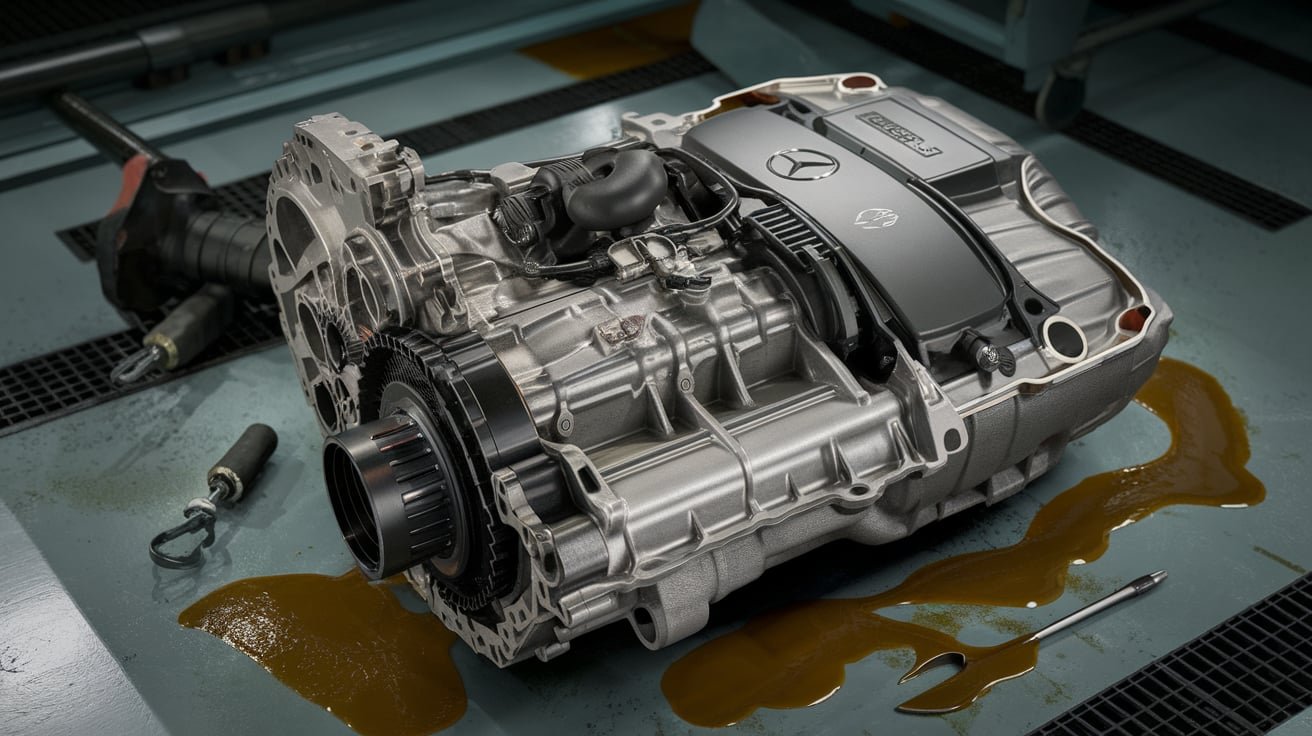
The list below is a diagnostic map, not a failure ranking. The correct order changes with the exact symptom, control-unit records and vehicle configuration.
Software and torque coordination
Engine and transmission software coordinate torque during a shift. A calibration issue, incomplete programming, unsuitable adaptation state or incorrect engine torque information may create a firm or poorly timed change. Software should not be updated or adaptations reset as a universal cure. The vehicle-specific technical information and the captured data must justify the action.
Voltage, wiring and communication
The 9G-Tronic control system depends on stable voltage, grounds, connectors, network communication and reliable sensor signals. Low voltage or an intermittent circuit can produce warnings, limited operation or inconsistent shifting. A fault code records the circuit or condition noticed by a control unit; it does not prove that the part named in the description has failed.
Fluid level or leakage
Automatic transmission fluid supports lubrication, hydraulic pressure, cooling and friction control. A leak, incorrect level or fluid that does not carry the required Mercedes-Benz approval can change engagement and shift behaviour. The level procedure and approved material must match the exact transmission and current vehicle-specific instructions. Fluid colour by itself does not identify the failed part.
Valve body and solenoids
Solenoids and hydraulic valves regulate clutch filling and pressure. Sticking, leakage, contamination, wear or an incorrect electrical command can create a harsh, delayed or slipping change. Commanded values, actual speed response, pressure evidence and fluid or pan findings should agree before valve-body work is authorised.
Converter or internal wear
Torque-converter control, internal clutch elements, seals, bearings, pump components and gear-train parts may cause slip, flare, shudder, noise or debris. Those possibilities move higher only when the road-test pattern, live data, pressure behaviour and physical evidence support an internal fault.
Mounts and driveline movement
Worn engine or transmission mounts, propeller-shaft joints, differential play or transfer-case behaviour can turn a change in torque into a noticeable thump. These components need a physical inspection and a controlled road test. Replacing transmission parts will not correct harshness generated after the gearbox output.
Checks that preserve evidence
-
Record the exact eventNote the selected gear, the change involved, throttle position, road speed, engine speed, temperature and whether the vehicle was accelerating, braking or coasting.
-
Photograph the warningKeep the dashboard message and the conditions in which it appeared. A restart may restore normal operation while the stored event remains useful.
-
Look for a fresh leakCheck the parking area without crawling under an unsupported vehicle. Do not add an unknown fluid or additive because the shift feels different.
-
Compare Drive and ReverseWith the brake applied in a safe stationary location, note whether one direction engages more slowly. Do not repeat the manoeuvre to force a failure.
-
Bring the service recordInvoices may identify previous fluid, pan, software or transmission work and help explain whether the present complaint began before or after it.
Do not disconnect the battery, erase fault memory or reset transmission adaptations before diagnosis. Those actions can remove or change evidence without correcting the cause.
Evidence-first diagnostic sequence
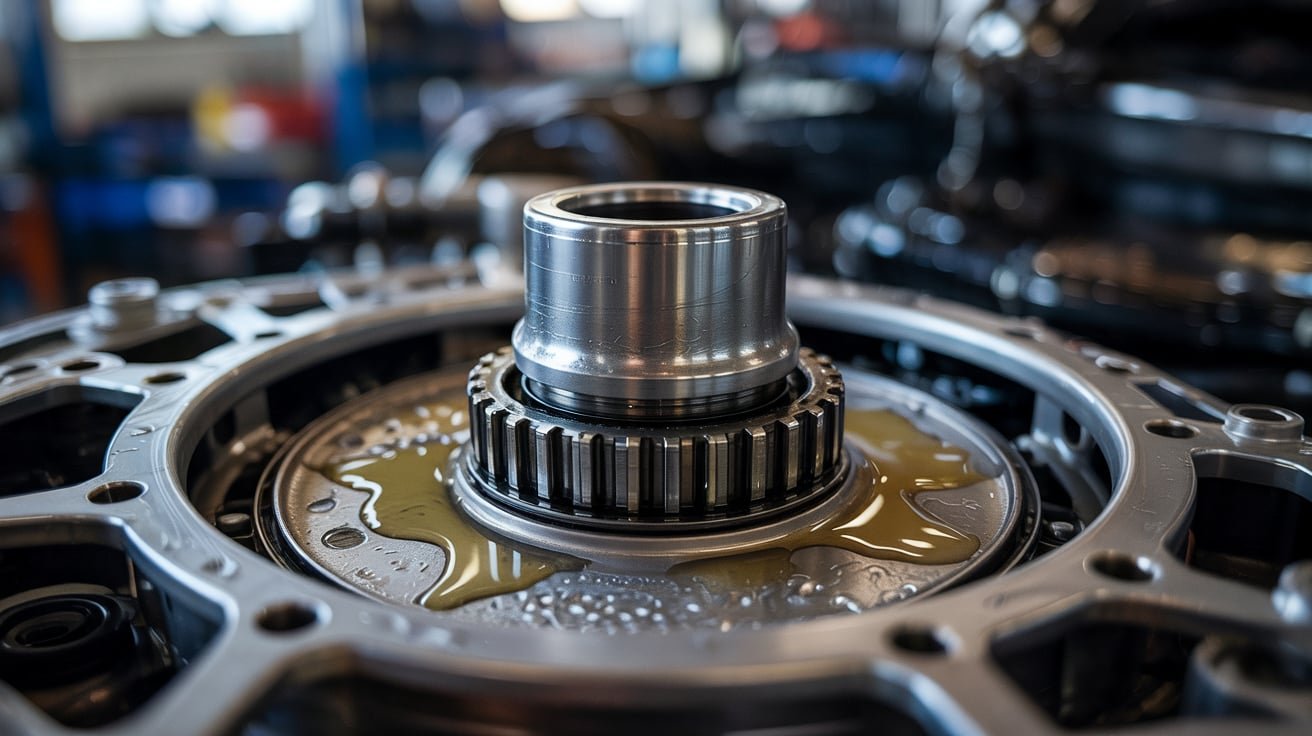
Mercedes-Benz developed a guided Intelligent Predictive Repair path for customer complaints involving the 725.0 because its quality reviews had found a high number of ineffective repairs. Its service guidance emphasises detailed complaint conditions, a quick test and transmission control-unit diagnosis before repair. The wider lesson is straightforward: identify, record, reproduce, separate and test before replacing.
1. Identify the transmission
Confirm the VIN, full transmission identity, vehicle configuration and relevant service information. Note previous programming, fluid, pan or internal repair work.
2. Preserve the original data
Complete a full-vehicle scan before clearing anything. Record current, stored and event-related faults, software information and useful adaptation or fill data. Include engine, power-supply and driveline control units where the complaint could cross system boundaries.
3. Reproduce the complaint
Road-test the car only when it is safe. Recreate the original hot or cold condition and record the exact gear change, load, engine speed, input and output speed, requested gear, actual response and converter behaviour where supported.
4. Separate outside causes
Check engine running quality and torque information, battery and charging voltage, mounts and relevant driveline components. On an all-wheel-drive vehicle, include the transfer case and its control data when the pattern points there.
5. Test the transmission
Verify leakage, the approved fluid and level under the specified conditions, electrical circuits, sensor plausibility and commanded-versus-actual operation. Hydraulic pressure, pan inspection or internal testing should answer a defined concern rather than be performed as disconnected theatre.
6. Verify the repair
Apply programming, adaptation or relearning only when required by the confirmed repair and vehicle-specific instructions. Repeat the same operating condition that produced the original fault and confirm engagement, shift quality, live data and fault status.
| Test or evidence | What it can show | What it cannot prove alone |
|---|---|---|
| Full fault scan | The circuit, signal, communication or operating condition recorded by a control unit | That the component named in the code is the failed part |
| Adaptation data | How the control system has been compensating during defined shift events | The precise wear point without supporting hydraulic or mechanical evidence |
| Live speed and slip data | Whether requested gear, clutch response or converter behaviour differs from the command | Whether the first cause is electrical, hydraulic or mechanical |
| Fluid and leak inspection | Incorrect level, active leakage, unsuitable material or contamination that justifies further work | That a fluid service will fix software, wiring or internal wear |
| Pan and debris inspection | The type and amount of material present and whether internal investigation is justified | Every possible valve-body, control, mount or driveline fault |
| Hydraulic testing | Whether pressure is available and changes as required under a defined condition | Which electrical command is wrong unless scan data is considered too |
When fluid service helps
A transmission fluid and filter service may be appropriate when the VIN-specific maintenance schedule calls for it, when a leak or incorrect level is being corrected, or when the installed fluid cannot be verified as approved for the unit. It may also form part of a measured diagnostic plan when the evidence points to a service-related condition.
It is not a universal cure for harsh shifts. Fluid cannot repair an electrical circuit, incorrect engine torque information, a damaged mount, a worn valve body, a slipping clutch or a failed converter. The current Mercedes-Benz approval and procedure should be confirmed for the exact transmission rather than selected from a generic “9G” label.
UAE driving conditions
High ambient temperature, long periods in slow traffic and repeated short trips can expose marginal cooling, voltage or fluid-control problems. They do not create one replacement interval for every 9G-Tronic vehicle. Follow the maintenance schedule and approved material for the VIN, then increase observation and inspection according to the car’s actual use and condition.
Record whether the complaint becomes stronger after extended traffic, a motorway drive or a hot restart. That pattern may help reproduce the issue, but it still needs to be compared with temperature, voltage, engine torque, transmission data and driveline behaviour.
Choose repair after diagnosis
The repair should follow the confirmed failure path:
- Software or control issue: apply the relevant programming or guided procedure, preserve pre-repair data and perform the specified adaptation or verification.
- Power, wiring or communication fault: repair the circuit or connection and confirm stable signals before considering internal transmission parts.
- Leak, level or service issue: correct the source, use the approved fluid and follow the exact fill and checking method.
- Valve-body or solenoid fault: support the repair with command, response, circuit and hydraulic evidence.
- Mount or driveline fault: repair the component creating or amplifying the jolt and verify the same load-change condition.
- Internal mechanical damage: use slip, pressure, debris and physical findings to compare targeted repair, rebuild or replacement.
A useful estimate should name the confirmed fault, the evidence behind it, the work included, any programming or adaptation required and the conditions used for final verification. “Needs a gearbox” without that chain of evidence is not a complete diagnosis.
Mercedes transmission diagnosis in Al Quoz
Bring the shift pattern, not a guessed part
Send the model, VIN or year, dashboard message and a short description of when the harsh shift, delay or shudder occurs. MercGarage can identify the transmission and test the evidence before recommending service or repair. See our Mercedes transmission repair service in Dubai for workshop options.
9G-Tronic questions
Is every nine-speed Mercedes automatic a 725.0?
No. The gear count and 9G-Tronic name are not enough to select parts, fluid or a test procedure. Confirm the VIN-linked transmission identity, full unit information and vehicle configuration before diagnosis.
Can an adaptation reset fix harsh shifting?
A reset may be part of a specified repair or relearning procedure, but it is not a first diagnosis. Adaptation values are evidence of how the control system has been compensating. Read and preserve them before changing them.
Can a fluid change fix 9G-Tronic harsh shifts?
It may help when an incorrect level, active leak, unsuitable fluid or overdue vehicle-specific service is part of the cause. It cannot repair software, wiring, a worn mount, valve-body damage, clutch slip or a failed torque converter.
Why does the gearbox shift hard only when warm?
Temperature changes fluid behaviour, clearances, electrical resistance and control responses. The warm-only pattern helps reproduce the complaint, but live data, fluid checks and targeted tests are still needed to identify the cause.
Can engine or transmission mounts feel like a harsh shift?
Yes. Excessive mount movement can amplify a normal change in torque into a thump through the body. Mounts, engine running quality and the rest of the driveline should be checked when the sensation occurs during load changes.
What does an RPM flare between gears mean?
It means engine speed rises while the next gear is expected to take over. The cause may involve hydraulic holding pressure, clutch response or an incorrect command. Requested gear, actual speed and slip data must be compared before a repair is chosen.
Can I drive with a 9G-Tronic warning?
Only a short, gentle trip may be reasonable when drive is stable and there is no slip, leak, grinding, burning smell, overheating instruction or unreliable engagement. Recover the vehicle if any of those higher-risk signs is present.
Does a fault code prove the valve body has failed?
No. A code records a signal, circuit or operating condition recognised by a control unit. Circuit tests, live data, hydraulic behaviour and the exact transmission configuration must support valve-body or solenoid replacement.
Technical references
Mercedes-Benz guidance for 725.0 transmission diagnosis describes the 9G-Tronic complaint categories and an evidence-led guided diagnostic path intended to reduce ineffective repairs.
Daimler guidance for a vehicle-specific rough 3–2 downshift documents an engine-software cause on one 725.0 application, illustrating why torque coordination must be checked rather than generalised to every vehicle.
Mercedes-Benz guidance for a light-load drivetrain jolt shows how a variable transfer case can create a sensation that must be separated from transmission, engine and control-unit faults.