Mercedes guide
Mercedes SL500 Maintenance Costs by Generation
Plan older SL ownership around the fitted roof, suspension, service history and measured condition across three generations.
Mercedes SL500 maintenance costs depend on the generation, fitted roof and suspension, and the car’s condition. Identify the R129, R230 or R231 first, then budget scheduled work separately from roof faults, hydraulic leaks, measured wear and age-related repairs.
A low purchase price can leave more work to catch up on, but age alone does not justify replacing every expensive component. The most useful starting point is a documented inspection and an itemized due-work list. A generic annual figure cannot tell you whether a particular SL500 is a sensible buy.
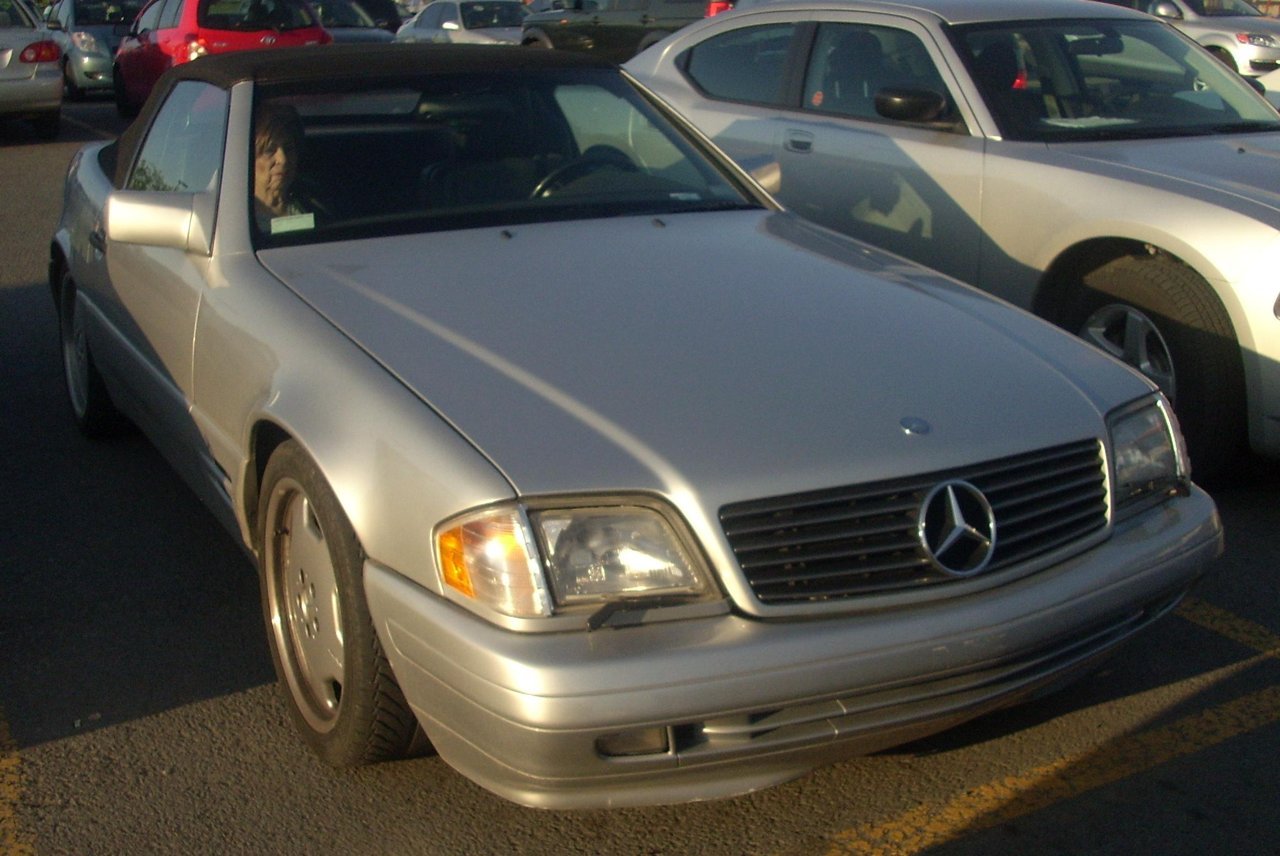
Photo: Bull-Doser · Public domain · Resized reference image
Start with the SL generation
The SL500 badge spans substantially different roadsters. A registration document, rear badge or seller’s description is not enough to order roof, engine or suspension parts. Confirm the vehicle identification number, or VIN, build specification, original market and any recorded modifications.
The R129 generation ran from 1989 to 2001, with early cars named 500 SL before the SL500 naming format. R230 production followed from 2001 to 2011. R231 arrived in 2012. Market-specific model years and first-registration dates can overlap those production boundaries.
| Generation | Roof distinction | Budget question |
|---|---|---|
| R129 | Fabric convertible roof and separate removable hardtop | What is the condition of the fabric, window, seals, operating mechanism and supplied hardtop? |
| R230 | Folding metal vario-roof | Does the complete roof sequence work, and which hydraulic or electrical finding explains any fault? |
| R231 | Later folding hardtop with equipment-dependent features | Which roof and chassis options are fitted, and what does the exact repair require? |
Mercedes’ histories of the R129 generation and R230 vario-roof explain the architectural change. A fabric-roof refurbishment and a folding-hardtop hydraulic repair are different jobs. Neither belongs in every SL500’s yearly service bill.
Engine and transmission details also changed during these generations. Avoid one oil quantity, plug count or gearbox procedure for all SL500s. The applicable maintenance information and installed components establish the parts list, particularly when a car has been imported or modified.
Give the inspection a clear purpose
For a car you already own, start with new symptoms and the last itemized invoices. For a potential purchase, ask for an inspection that covers the roof, underbody, leaks, suspension, brakes, cooling, electrical operation and evidence of previous repair. An ordinary oil-service checklist may not cover all of those areas.
Ask which systems can be assessed without dismantling and which require further authorization. A short road test cannot prove long-term reliability, and a diagnostic scan cannot show every leaking seal or worn joint. The report should explain the limits of what was checked.
Useful findings are specific. A photograph of an active leak, an identified failed roof input, a measured brake condition or a recorded suspension fault provides a basis for the next decision. A statement that an old SL needs everything does not.
- Separate immediate safety concerns from routine maintenance.
- Identify active faults requiring diagnosis before parts are quoted.
- List measured wear and a sensible reassessment point where appropriate.
- Keep optional cosmetic restoration in a separate budget.
Inspect low-mileage cars as carefully as frequently driven examples. Storage history, age, previous repairs and operating condition all matter. A low odometer reading does not establish healthy roof seals, dry electrical compartments or recently renewed fluids.
Price the roof fault before the roof assembly
A roof that stops midway needs a controlled diagnosis. Record where the sequence stops, the exact message and whether windows or the trunk partition have changed position. Do not repeatedly cycle the mechanism, force panels or reach into moving joints to help it close.
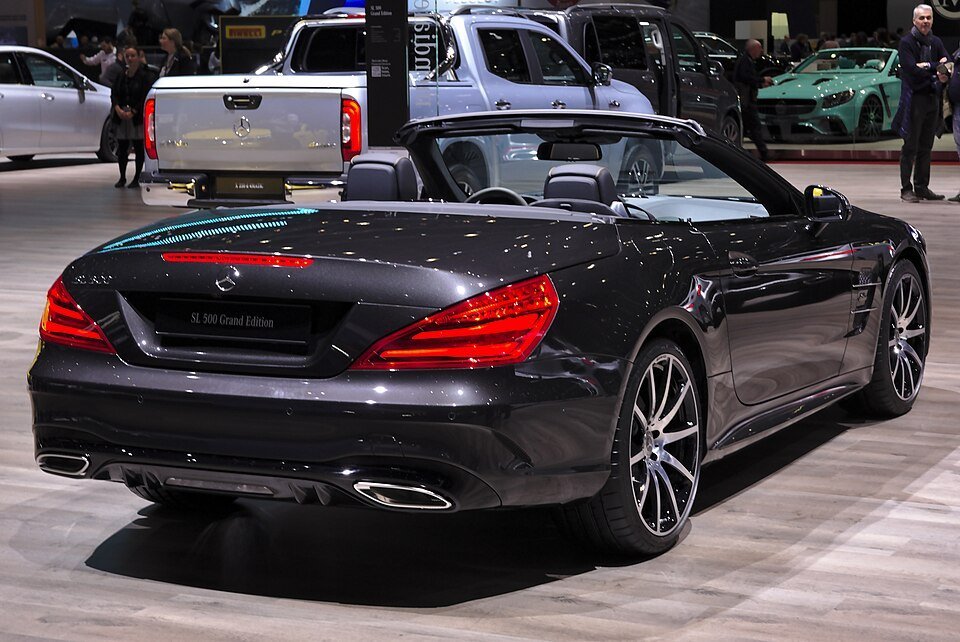
Photo: Alexander Migl · CC BY-SA 4.0 · Resized reference image
On the R129, distinguish fabric and rear-window condition from operation of the roof and hardtop locks. Water entry through aged material is a different complaint from a hydraulic leak or an incomplete operating sequence. The separate hardtop, its seals and safe storage can also affect an ownership budget.
On the R230 and R231, the folding hardtop coordinates several mechanical, hydraulic and electrical actions. A stopped sequence does not identify the pump as the cause. The technician needs to consider supply voltage, position information, interlocks, wiring and the relevant hydraulic circuit.
A targeted repair may be appropriate when the fault is localized and the rest of the system is serviceable. A cylinder rebuild, replacement cylinder, hose repair or electrical repair has a different scope from replacing a complete mechanism. Rebuilding is an option only where a competent supplier supports the specific component.
What a useful roof quotation contains
- The affected mechanism or component and supporting findings.
- Access labor, trim removal and any required seals or hydraulic fluid.
- New, rebuilt or used part condition and supplier identity.
- Required setup, checks through the complete operating sequence and leak verification.
- Warranty coverage, parts availability and what happens if further damage is found.
No current, adequately scoped roof-repair price is established here. Request a vehicle-specific estimate after assessment instead of treating a pump-only advertisement as the fitted total. If the roof is unsecured or cannot be safely closed, obtain recovery advice rather than assuming the car is roadworthy.
Identify the suspension before budgeting
Active Body Control, or ABC, is a hydraulic suspension system where fitted. It is not AIRMATIC air suspension. The presence of a roof hydraulic system also does not prove that the car has hydraulic suspension; these are separate systems with separate faults and service requirements.
R129 equipment requires its own assessment, including any Adaptive Damping System, or ADS, fitted to the car. Do not attach a later ABC parts list to an R129 from the badge alone. On later SLs, verify standard versus optional equipment and any aftermarket conversion.
Mercedes’ later R231 chassis description distinguishes steel suspension with variable damping from optional hydraulic ABC. Equipment differs by model and market. A ride-height or damping complaint therefore needs identification before an estimate can name a strut, valve, pump or control component.
One low corner or a harsh ride does not establish that the entire suspension has failed. Appropriate professional checks may distinguish external leakage, hydraulic supply or control concerns, sensor information, mechanical wear and electrical faults. A fault code supports the investigation but cannot replace it.
Ask whether the proposed price covers one component or a complete system, and whether fluid, cleaning, alignment or calibration is required. A suspension conversion changes the car’s design and needs a separate assessment of safety, compatibility and applicable approval requirements. It should not be presented as a routine money-saving substitute.
Investigate leaks and age-related condition
When you notice fluid underneath the car, record its location and when it appears without touching unknown fluid or crawling beneath an unsupported vehicle. A technician must identify the circuit and source. Engine oil, coolant, brake fluid and hydraulic-system fluid are not interchangeable.
For a visible leak, ask whether cleaning and reassessment are needed to distinguish an active source from old residue. Fluid can travel along an undertray or component before dripping, so the wettest visible point is not always the failed seal.
Roof seals, drain paths and cabin or trunk moisture deserve attention on a convertible. Wet trim can require controlled water-entry testing and inspection of affected electrical areas. Simply drying the carpet or replacing a control unit without resolving water entry may leave the original problem in place.
Age-related checks can include hoses, belts, mounts, bushings, connectors and previous repairs. Condition supports the recommendation. There is no evidence-based reason to replace every sensor, module or hydraulic component solely because the car has reached a particular birthday.
Ask the workshop to distinguish a minor seep requiring monitoring from a leak that affects safety or reliable operation. A low fluid level, rapidly increasing leak or warning changes the urgency. That decision should come from the identified system and observed condition, not a universal rule for all leaks.
Keep urgent conditions ahead of the budget
Repeated coolant loss requires investigation. It should not be treated as a normal consequence of Dubai weather or solved by recurring top-ups. A hose, reservoir, radiator, pump or another source may be involved, and the repair depends on the findings.
Do not open a hot pressurized cooling system. Stop safely for overheating, steam or an instruction to stop, switch off as directed by the manual and arrange assistance. Do not continue driving simply because more coolant is available.
| Observation | Priority | Next action |
|---|---|---|
| Abnormal braking or serious brake warning | Immediate safety assessment | Stop safely and arrange qualified help |
| Very low ride height or tire contact | Potentially unsafe to drive | Seek recovery guidance before moving the car |
| Roof unsecured or stopped partly open | Mechanical and road-safety concern | Keep clear of the mechanism and request assistance |
| Slow roof operation without a stop condition | Prompt planned assessment | Document the behavior and avoid repeated testing |
| Service reminder with normal operation | Scheduled maintenance | Match the due list to records and obtain a quote |
Brake systems and procedures vary across SL generations. Ask the technician to identify the fitted system before work begins. Inspection should address pad and disc condition, leaks, warnings and operation; a fluid exchange is not a repair for an abnormal pedal or braking fault.
Build the scheduled work list
Use the vehicle-specific maintenance information and invoices to identify due oil, filters, plugs and fluid operations. The service reminder is one input. It is not evidence that every filter and fluid must be replaced at every visit.
An oil quote should state the approved lubricant, quantity, filter, seals and labor. Additional engine air or cabin filters need explicit lines. A clogged cabin filter may restrict airflow, while warm air with normal flow may need separate air-conditioning diagnosis.
Transmission maintenance requires the actual gearbox, correct fluid and specified procedure. Earlier and later SL500s cannot all be placed in one modern seven- or nine-speed service package. Slipping, delayed engagement or a warning must be investigated separately from due fluid maintenance.
Tires need inspection for specification, condition, age, damage and wear pattern. Confirm front and rear sizes before proposing rotation, because a staggered setup may prevent front-to-rear interchange. Do not prescribe a universal tire-replacement mileage or assume alignment fixes a worn joint.
For batteries, identify each installed unit and its function before selecting a replacement. Test findings, capacity, chemistry and vehicle requirements matter. Registration or initialization must be checked for the exact application; neither should be added automatically to every older SL invoice.
Use estimates only within their stated scope
The following MercGarage common-service estimates were checked on September 29, 2026 and include 5% VAT. They are useful comparison examples only where the identified SL500 matches the stated application. They do not establish a model-wide annual total, roof-repair price or ABC overhaul cost.
| Example operation | Estimate including VAT | Applicability and exclusions |
|---|---|---|
| Initial assessment of one concern | AED 250–450 | Scan where relevant and initial targeted checks. Parts, dismantling and extended roof or hydraulic testing are separate. |
| Compatible 7G or 9G fluid service | AED 950–1,800 | Agreed drain and fill, correct fluid, new filter, required pan seals, labor and level checks. Not an earlier gearbox quote or an internal repair. |
| Compatible main 12V AGM battery | AED 850–1,600 | One new 70–95 Ah battery, fitting, starting and charging checks, registration where required. Other sizes, chemistry and additional batteries need separate pricing. |
These ranges come from the current service estimates and inclusions. An absorbent glass mat, or AGM, battery is a particular battery construction, not a universal requirement for every SL500. Confirm compatibility before using that example in your plan.
A complete engine service needs a separate engine-specific total. The workshop’s advertised four-cylinder oil package does not establish a V8 price. For roof or suspension work, ask for the diagnosed component, access labor, fluids, final checks and tax-inclusive payable amount.
Three common planning situations illustrate the distinction. A documented car may need only due maintenance. A car with a roof complaint needs an assessment before a repair estimate. A newly purchased car with missing records needs a prioritized baseline, with uncertain history recorded instead of treated as proof that everything has failed.
Compare repair options as complete jobs
A localized repair can be better value than replacing a serviceable assembly, but only when testing identifies the fault and the repair method is suitable. Ask what remains original, what is renewed and how the completed work will be verified.
For a rebuilt roof or hydraulic component, check the rebuilder’s supported application, inspection process and coverage. A used component has its own age and history. A new part can still require installation materials, adjustment or further testing, so compare fitted totals rather than component prices alone.
Genuine, original-equipment and aftermarket labels do not remove the need for a part number and compatibility check. Avoid blanket claims that all alternatives fail or all genuine parts guarantee a longer life. Warranty terms and responsibility for repeat labor should be written into the quotation.
For work involving obsolete parts, agree on sourcing and storage arrangements before dismantling. Ask whether the car can remain safely mobile while parts are ordered. Do not assume that an online listing or overseas stock indication guarantees local availability or a collection date.
Plan around condition rather than a failure calendar
Separate the next twelve months into confirmed maintenance, measured wear, diagnosed repairs and optional improvements. Hold a personal reserve for uncertainty without treating that reserve as a predicted workshop bill. Roof and hydraulic repairs are possible ownership expenses, not guaranteed annual events.
A hypothetical R129 with a sound mechanism but damaged fabric needs a different plan from an R230 with a hydraulic leak. An R231 with complete records and no current fault may need routine work only. These scenarios illustrate decisions; they are not workshop case histories or failure-rate evidence.
Storage and occasional use also affect planning. Follow the applicable manual for battery care, tire pressures and roof use. Avoid repeated short starts or improvised charging arrangements as a substitute for a suitable storage plan, and have stale fuel or long inactivity assessed when relevant.
After repairs, request verification appropriate to the original complaint. Roof work should include the relevant operating and leak checks. Suspension work may need further setup or alignment. Cooling repairs should be checked for the identified loss rather than accepted solely because the reservoir was refilled.
Questions before committing to an older SL
Does every SL500 have ABC?
No single suspension assumption covers all generations and markets. Identify the fitted system from the VIN and physical equipment. R129 ADS, later ABC and other suspension configurations need different parts and procedures.
Can roof hydraulics and suspension share one repair quote?
They can be listed on one document, but they remain separate systems and diagnoses. The estimate should identify each fault, component and fluid requirement rather than describe one generic hydraulic overhaul.
Is a high-mileage car automatically more expensive?
Not necessarily. Condition, documented work and remaining faults matter. A neglected low-mileage car can have substantial catch-up needs, while mileage alone cannot predict the next repair.
Should I keep adding coolant in summer?
No. Repeated loss needs investigation. Never open a hot pressurized system, and stop safely for overheating, steam or a stop instruction.
Is an SL550 simply the same car with another badge?
Some market versions share underlying configurations, but the badge alone does not establish that. Compare generation, engine, original market and fitted equipment before transferring a service plan.
Make condition the basis of the budget
Identify the SL500 first, inspect the roof and fitted chassis systems, and price the work supported by records or findings. Keep optional restoration and a personal repair reserve separate. That produces a useful ownership plan without inventing a fixed annual failure bill.
Discuss an SL500 inspection
Tell MercGarage in Al Quoz 4, Dubai the year, mileage, roof behavior and any warning or visible leak. Bring available invoices and request separate estimates for due maintenance and diagnosed repairs. Confirm the assessment scope and charges before the appointment.