
A pressure value is low
Check against the vehicle’s specified cold pressure for its tire size and load. Inspect for leakage when the pressure falls again. Resetting the system to accept an underinflated tire hides the problem rather than solving it.
Pressure warning back again? Find out whether your Mercedes needs air, a leak repair, a system restart, or a replacement sensor.
We check the tires and sensor response before quoting parts. Get the correct sensor fitted and the applicable learning procedure completed, with the result checked before collection.
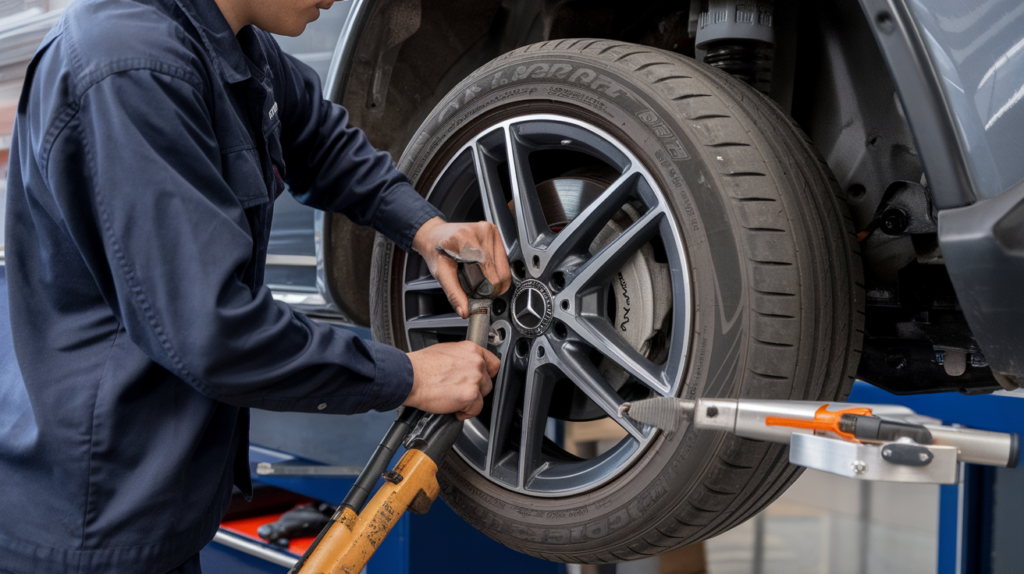
A missing pressure reading and a genuinely low tire are different problems. The dashboard message helps, but the first check is the physical tire and its measured pressure. Clearing a message does not repair a puncture, a leaking valve, or a damaged sensor.
Stop in a safe place and avoid continuing on a damaged or deflated tire. Call for guidance and recovery arrangements. A TPMS warning does not establish that the tire is safe to drive, including when run-flat tires are fitted.
Check against the vehicle’s specified cold pressure for its tire size and load. Inspect for leakage when the pressure falls again. Resetting the system to accept an underinflated tire hides the problem rather than solving it.
A sensor that does not respond, the wrong replacement part, recent tire work, or incomplete learning may be involved. We compare wheel-by-wheel responses before recommending a replacement.
The cause may extend beyond one wheel sensor. Actual wording, scan results, receiver operation, and communication checks guide the next step. Replacing all four sensors without testing can leave the original fault unresolved.
Warning started after tire or wheel work? Tell us which wheels changed and whether readings worked beforehand. Bring any available sensor details from the fitter. We check pressure, disturbed valve components, compatibility, and learning before recommending new parts.
The following are complete planning estimates including VAT for the stated scope. Sensor prices depend on the fitted system, part choice, wheel access, and compatibility. We explain the diagnosis and final total before you approve replacement.
| Service | Estimated total | Included work and limits |
|---|---|---|
| Initial TPMS system check | AED 100–200 | Pressure comparison, accessible tire and valve inspection, sensor-response check where applicable, and an initial fault review. Further electrical diagnosis and repairs are separate. |
| Restart or relearn only | AED 100–200 | For a compatible, working system after pressures are corrected. Applicable initialization or learning and a result check. No new sensor or leak repair included. |
| One compatible replacement sensor | AED 250–450 | One suitable replacement sensor, normal tire access, required valve service components, fitting, balancing of the disturbed wheel, applicable learning, and final checks. |
| Four compatible replacement sensors | AED 900–1,600 | A matched set where suitable: sensors, normal fitting access, valve service components, balancing, applicable learning, and pressure checks. Replace a set only after discussing the reason. |
| Valve service with a working sensor | Quote after valve check | A suitable service kit may repair a serviceable valve leak without replacing the transmitter. Confirm the valve design, required tire access, fitting, leak check, and any balancing in the total. A damaged sensor body may require replacement instead. |
These ranges cover suitable replacement options, not every genuine part or newer sensor system. A genuine-part preference or unusual application can cost more. Tire replacement, puncture repair, damaged wheels, receiver faults, and additional electrical work are excluded. The AED 100–200 check is a standalone assessment estimate. Before booking, confirm its charge and whether any of it is included or credited if you approve a repair. Compare the combined diagnostic and repair total; no automatic credit or free check is advertised.
Get my TPMS quoteReplacing the affected sensor can be enough when the others communicate correctly and remain compatible. The quote should make clear which wheel is included. A single failed transmitter does not automatically justify four replacements.
A set may be worth comparing when several sensors fail testing or the owner wants to avoid repeated tire removal as older units reach the end of service. Age supports the discussion but does not prove that every unit has failed.
If the sensor still communicates and its serviceable valve components are the cause, an appropriate service kit may resolve the leak. Cracked bodies, damaged threads, corrosion, or nonserviceable designs can change that decision.

Already booking new tires? Mention the warning so sensor checks and tire access can be planned together. Our Mercedes tire replacement service covers tire selection and fitting. Replacing the tires does not automatically mean the sensors need changing.
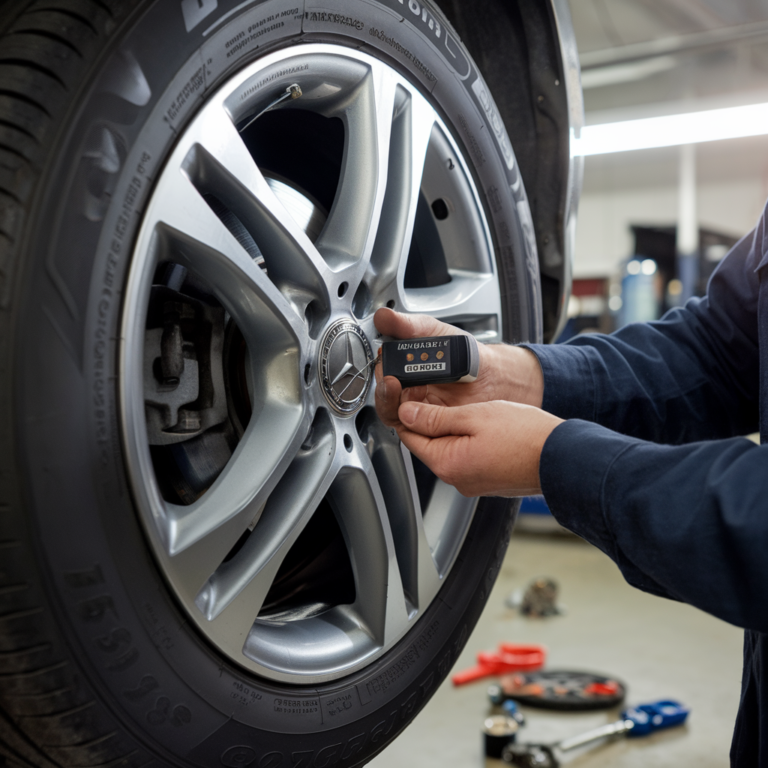
The assessment explains which wheel or system needs attention and why. Review the measured pressure, available sensor responses, and any additional tests needed before approving parts. A fault code alone does not establish that a sensor needs replacing.
Compare readings with a gauge and inspect accessible tire, valve, and wheel areas. If air is escaping, locate the leak before treating the dashboard warning as an electronic fault.
On a direct-monitoring system, check the wheel sensors using a compatible tool. Review available identification, pressure, and status information. Not every sensor reports a precise battery percentage.
Read relevant faults and compare recognized sensors with the fitted wheels. Missing data from several wheels can justify receiver, power-supply, or communication checks rather than a full set of parts.
Ask whether the warning followed tire fitting, wheel replacement, rotation, or an imported wheel set. Check the actual sensor application and the learning procedure needed for that car.
Equipment varies by model, production date, and market. We identify the fitted system before pricing wheel sensors. An A-Class, C-Class, E-Class, S-Class, GLC, GLE, GLS, G-Class, AMG, or imported Mercedes should not be assigned a sensor from its badge alone.
This system receives data from wheel-mounted transmitters. A replacement must communicate with the car and fit the wheel and valve arrangement. A compatible programmable sensor may need configuring before the vehicle learns it.
Many sealed sensor batteries are not separately serviceable. If the transmitter battery is exhausted, sensor replacement is generally the practical repair. A leaking replaceable valve component is a different fault and may not require new electronics.
Some configurations detect pressure loss using wheel-speed information instead of individual pressure transmitters. They do not need a set of direct TPMS sensors simply because a warning appears.
The checks focus on correct tire pressures, appropriate initialization, tire condition, and any related system faults. We confirm the equipment rather than charging for sensors that the vehicle does not use.
Radio frequency alone is not a complete compatibility check. Sensor protocol, supported application, valve type, wheel design, and the car’s equipment matter together. Share any wheel-change history if known; extra vehicle details can be requested later for accurate parts matching.
A dashboard restart accepts reference pressures on applicable systems. Sensor programming configures a suitable replacement, while relearning lets the vehicle recognize it. The required combination varies. Follow the Mercedes owner’s manual for the fitted system rather than one universal reset sequence.
The lowest part price is useful only when the sensor works with your Mercedes. Compare the named part, fitting, required programming, learning, and final checks as one total.
A Mercedes-branded part matched to the vehicle application. Request the current part price and availability before booking. The standard replacement range is not a promise that every genuine sensor is available at that price.
A replacement from an original-equipment supplier must still match the actual application. Supplier identity alone does not prove that every sensor in its catalog fits your car. Compare its exact specification and quoted terms.
A supported aftermarket sensor can be configured for the required application. Confirm compatibility, programming, valve fit, and applicable coverage. The compatible-sensor planning examples below use this category where supported.
Stock and part lead times are confirmed for your car. A familiar brand, matching frequency, or similar valve appearance alone is not a fitment guarantee.
These are estimated repair scenarios for compatible direct-monitoring applications, not completed jobs or guaranteed offers. Totals include VAT. Replacement examples allow for compatible programmable aftermarket sensors, where supported, rather than genuine Mercedes-branded parts. The actual equipment and inspection results decide whether the work is appropriate.
Check tire pressures and sensor response after tire service, perform the applicable restart or learning procedure, and confirm the result. No new parts, tire repairs, or extended fault tracing.
Initial confirmation of the affected wheel, one compatible replacement sensor, normal tire access, valve service components, fitting, balancing, learning, and final pressure check. No wheel damage or puncture repair.
A compatible set after testing and discussing multiple aging or failed units. Includes normal fitting, valve service components, wheel balancing, applicable learning, and final checks. No receiver replacement or additional electrical repair.
Identify the affected wheel or system concern, show the proposed part choice, and agree the full price. The number of sensors replaced should have a clear reason.
Access the sensor with appropriate tire-handling equipment. Fit the required sealing components and follow the part’s tightening requirements. The tire and wheel must remain serviceable for refitting.
Configure a programmable replacement where necessary, carry out the relevant restart or learning process, and allow the system to recognize the sensor. Some vehicles require driving under the specified conditions.
Verify leakage at the serviced area, the tire pressure, wheel balance, and the available system readings. A cleared warning without a confirmed response is not the same as a completed check.
If a warning returns, share the exact message and when it appeared. A new puncture, a different aging sensor, and an unresolved communication fault need different follow-up checks.
A working monitor is an aid, not a substitute for checking tire condition. It cannot guarantee protection against sudden damage or every rapid loss of air. Regular checks still matter after a successful sensor repair.
Follow the car’s pressure label and manual for tire size and load. Pressure changes with temperature and use. Do not bleed a warm tire down to a cold specification simply because its display shows a higher reading after driving.
The sensor is vulnerable during tire removal if the equipment or technique is unsuitable. Valve hardware also needs the correct components and tightening procedure. A sensor should not be treated like an ordinary rubber valve without checking its design.
If one tire keeps losing pressure, arrange a leak inspection. If readings disappear after new wheels are fitted, confirm sensor compatibility. Repeated initialization does not repair either problem.
Retain the sensor or valve information and the date of replacement. If wheels are swapped later, those details help distinguish an incompatible set from a new fault. A replacement does not reset the age of sensors left in the other wheels.
Allow AED 250–450 including VAT for one compatible replacement with normal fitting, valve service components, balancing, applicable learning, and final checks. Genuine parts and unusual applications may cost more. Confirm the diagnostic charge and combined total before approval.
Allow roughly 45–75 minutes after work starts for a straightforward single-sensor job, plus any additional learning or fault diagnosis. A set may take 90–150 minutes. These are planning times, not appointment guarantees. Confirm stock and whether to wait or leave the car when booking.
Yes, when testing identifies one faulty compatible unit and the other sensors work correctly. We quote the affected wheel and explain if there is a practical reason to consider more than one.
That depends on the fitted system and sensor. Some applications recognize suitable sensors through a driving procedure; others require additional setup. We follow the applicable process and verify the result.
Many original wheel sensors use sealed batteries that are not intended for separate routine replacement. If the battery is exhausted, the transmitter is usually replaced. We confirm the actual sensor design first.
The replacement planning ranges on this page include VAT and the normal fitting, valve service components, balancing, learning, and checks described in the table. Unusual parts, tire damage, and electrical faults can cost more.
Check tire condition and pressure and follow the vehicle’s warning instructions. A malfunction means monitoring may be unavailable. Stop safely for a flat tire, rapid pressure loss, vibration, or unstable handling and call for guidance.
Some applications differ by market and equipment. We check the compatible sensor and communication requirements. Model name or frequency alone is not enough to confirm fitment.
An owner restart may be available in the car’s menu after the correct pressures are established. Use the applicable manual. Do not reset a warning to avoid repairing a leak, damaged tire, or diagnosed sensor fault.
No. Start with the Mercedes model and the warning you see. A photo or year is helpful if available. We request further details only when needed to match parts or plan the correct checks.
Tell us the model, dashboard message, and whether the warning followed tire work. We will arrange the checks, explain the required repair, and confirm the total before work. Ask about part availability and whether your visit can be planned as a waiting appointment.
For Mercedes TPMS repair near you, visit 39, Al Quoz 4, Dubai. Contact us before traveling from Jumeirah, Business Bay, Downtown Dubai, or another emirate so the team can confirm an appointment.
Mention your preferred day and whether the car has a flat tire or handling concern. If recovery is needed, agree availability and transport charges separately.