
Mercedes guide
Mercedes Door Lock Actuator Faults and Repair Options
Separate Mercedes door lock actuator, latch, wiring and control faults using one-door versus whole-system symptoms, with safe next steps and repair options.
A Mercedes door lock actuator fault can leave one door unresponsive, but the actuator is only one possible cause. A sticking latch, damaged wiring, a handle cable, a pneumatic leak on an older model, or a control fault can produce similar symptoms. The useful first distinction is whether one door is affected, several doors are affected, or the door cannot physically close securely.
This guide explains what those patterns can tell you, what a workshop should verify, and how to compare repair options without assuming every Mercedes uses the same locking system.
Is the door failing to lock, unlock, or latch?
These are different complaints. The latch holds the door against its striker when the door is closed. The locking mechanism controls access through the handles. The actuator provides powered movement within that system. Depending on the vehicle, these components may be combined in an assembly or serviced separately.
A door can close securely yet fail to lock against outside entry. It can also be locked while a broken handle linkage prevents it from opening normally. Neither observation, by itself, identifies a failed actuator. Tell the workshop exactly which function has stopped working.
Soft-close, where fitted, pulls a partly closed door into its fully closed position. It is an additional function, not a feature fitted to every Mercedes and not a substitute for a sound mechanical latch. The 2013 US SL operator’s manual, Doors section describes its power-closing function and warns against driving with doors open or tampering with the latch to activate closing assistance. Other models require their own operating instructions.
If a door cannot be opened from the inside, keep that seating position unoccupied until the cause is understood and normal exit is restored. A rear child lock may intentionally disable an inside handle, but a new or unexplained loss of opening should not simply be dismissed as a setting. If someone is trapped or in immediate danger, contact emergency services.
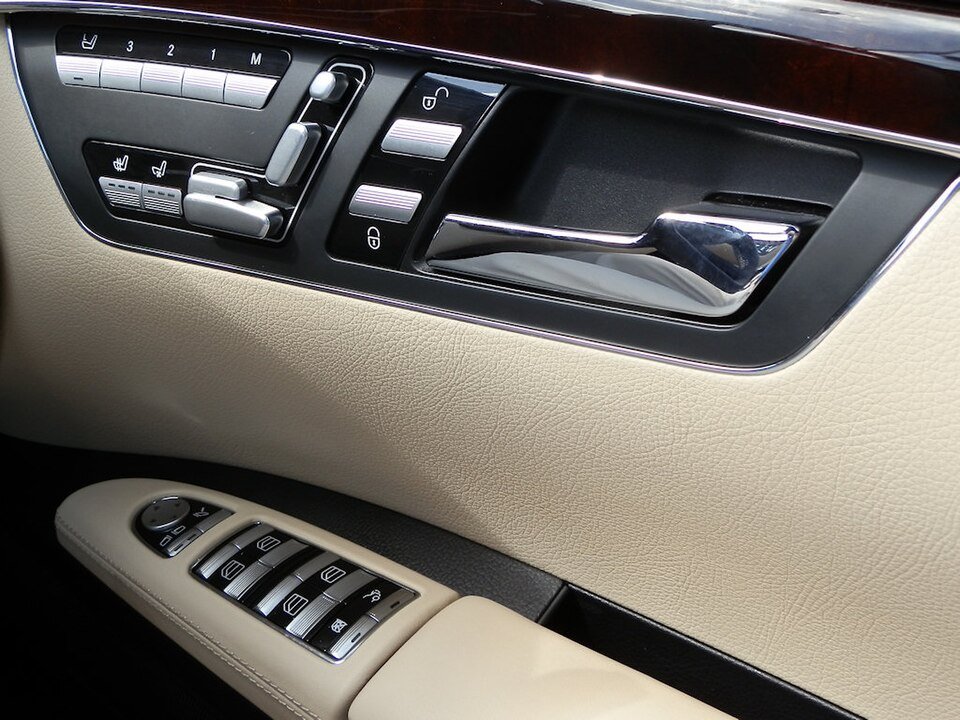
One door versus several affected doors
| Observed pattern | Checks it makes useful | What it does not prove |
|---|---|---|
| One door ignores both remote and interior locking commands | That door’s latch, actuator, wiring, connector and local control path; pneumatic branch if fitted | That its actuator motor is necessarily defective |
| Several doors stop responding together | Vehicle power supply, command reception, fuses and shared control or pneumatic supply | That every door needs a new lock assembly |
| Remote fails but the interior switch works | Key operation, key battery where applicable, reception and command authorization | That the door hardware is faulty |
| Door locks but one handle will not open it | Handle, cable or linkage, latch release and relevant child-lock setting | That a central locking reset will repair it |
| Soft-close stops, but normal closure and locking still work | Closing-assist equipment fitted to that vehicle and its status signals | That the central locking actuator is the failed part |
| Door will not remain securely closed | Immediate professional inspection of latch retention, striker and door alignment | That it is safe to drive because the lock indicator moved |
These patterns set priorities; they are not a parts-ordering checklist. A shared electrical fault can affect only one output, while an older pneumatic system can have a leak affecting more than one opening. Two faults can also coexist, particularly after water entry or previous door repairs.
Selective unlocking can make the driver’s door unlock before the others as an intended setting. Check the exact owner’s manual before describing that behavior as a failure. Also note whether the problem affects locking, unlocking, or both, because that distinction is more useful than saying the door is “dead.”
When the remote works but the handle does not
If the door locks and unlocks normally with the remote but does not respond to a fitted KEYLESS-GO handle, report that exact difference. The handle sensor, key detection, key battery, settings and related wiring need consideration before replacing a working lock actuator.
The 2016 US GLC operator’s manual lists deactivated KEYLESS-GO, a weak key battery and radio interference among possible causes of keyless-entry trouble. Those checks apply to the covered equipment; use your own vehicle’s manual for its procedure. A keyless-entry fault and an actuator fault can coexist.
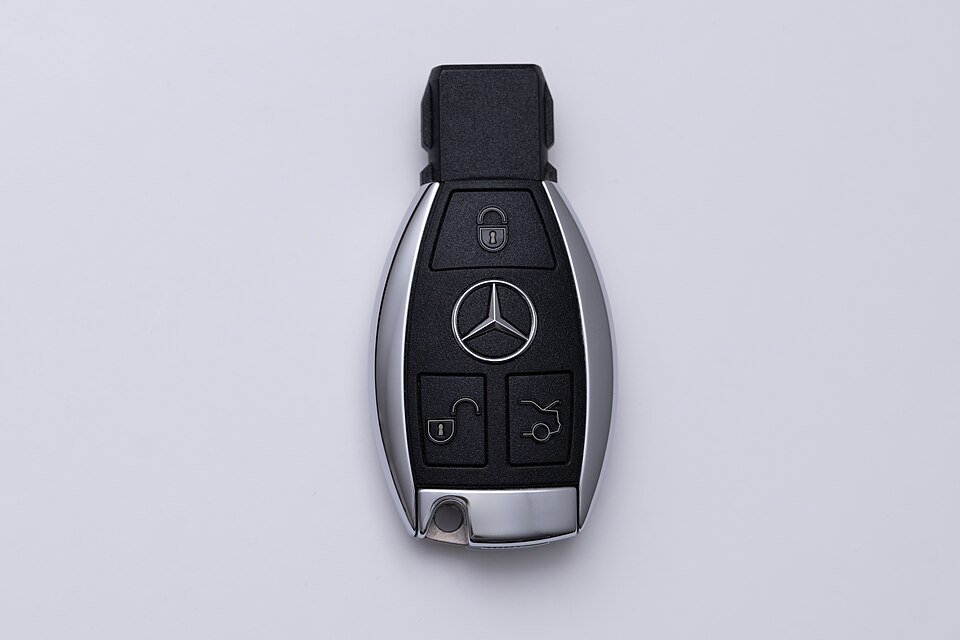
Identify the vehicle’s actual locking system
Provide the VIN, model year, chassis generation and affected door. An E-Class badge alone does not identify the central locking architecture. Body style, production changes, market specification and fitted options can change the parts and diagnostic procedure.
On vehicles with electric lock actuators, diagnosis follows the relevant wiring diagram and control-unit arrangement. The command may pass through door electronics and other vehicle systems. Calling every fault a “BCM issue” skips the work needed to identify which controller, circuit or mechanical part is involved.
Older designs need a different approach. Mercedes-Benz USA’s StarTuned Summer 2022 guide to Model 210 central locking describes the pneumatic PSE system on the covered E-Class vehicles, specifically its discussion of model year 1998 and later DAS3 versions. There, a pump and pneumatic circuits are part of the locking system. A leaking line or locking element can therefore matter alongside electrical supply and control checks.
That example does not mean every older Mercedes uses the same pump, circuit layout or test values. Nor does the presence of pneumatic central locking establish how closing assistance works on a different model. The workshop should use current vehicle-specific service information rather than applying a procedure from another generation.
Identify the exact door before ordering parts: left or right, front or rear, and the correct equipment specification. A visually similar assembly is not enough evidence of compatibility. Any required coding, initialization or adaptation should be established from the actual replacement procedure.
Useful checks before the appointment
Keep owner checks simple and stationary. Park safely, retain the key outside the vehicle, and avoid any test that could lock a person inside or leave you unable to regain access. Stop repeated operation if the mechanism struggles, cycles continuously or becomes unreliable.
- Record the affected functions. Note which doors respond to the remote and interior switch during normal use. Include the trunk or fuel flap only if you have already noticed a related fault.
- Compare available keys. If you have a known working spare, note whether behavior differs. Follow the manual for a key-battery warning rather than assuming every remote fault is a flat battery.
- Describe the sound. Silence, a click, repeated movement or a pump running unusually long are useful observations. None identifies a failed part on its own.
- Record other symptoms. Mention a door-open message, an inoperative window, intermittent mirror operation, water entry or a recent low-voltage event.
- Give the repair history. Recent bodywork, trim removal, battery work or a replaced lock can help identify a connection, adjustment or compatibility problem.
A short video taken while safely parked can document an intermittent fault. Explain whether it occurs after rain, washing, a long period parked or ordinary repeated use. These circumstances help reproduce the problem; they do not establish heat damage or water damage without inspection.
Do not force the handle, slam the door repeatedly, probe the latch with a screwdriver, bridge wires or remove door trim to experiment. Door assemblies can contain airbags and sensitive wiring. Use the manual’s emergency-key instructions only for the exact vehicle, remembering that mechanical entry can trigger the alarm.
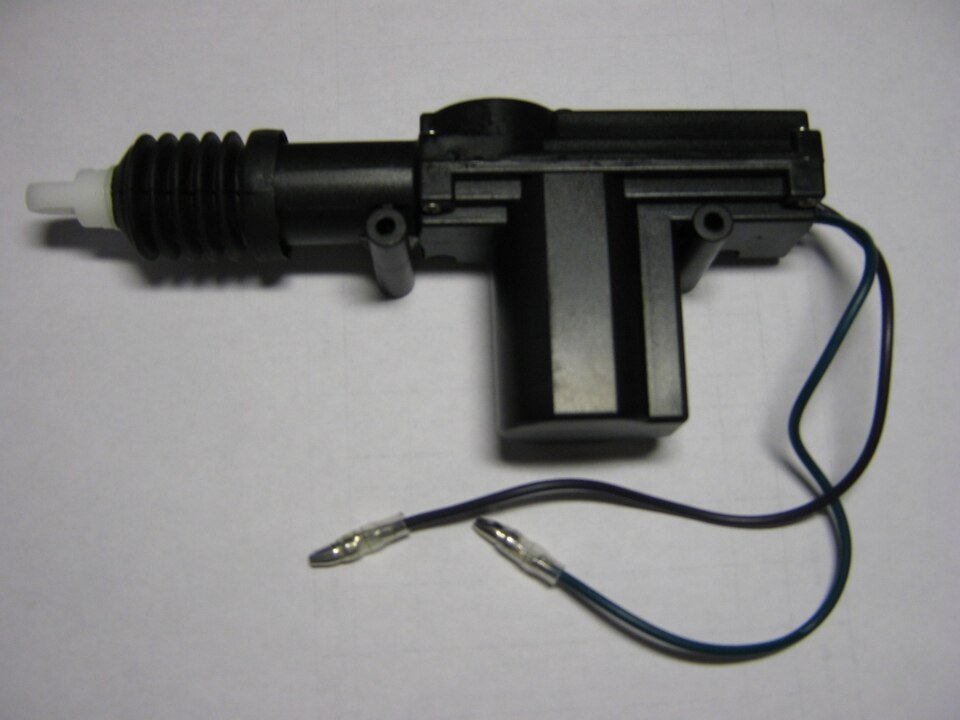
What a sound workshop diagnosis includes
The technician should first verify secure closure and safe opening. If those are compromised, mechanical safety takes priority over convenience functions. Next comes confirming the complaint and identifying the installed system before dismantling or replacing parts.
- Check the supply and fault history. Assess the relevant vehicle battery supply and fuses, then read applicable control units with compatible diagnostic equipment. Save useful fault information before clearing it. A fault code guides testing; it does not automatically condemn the named component.
- Compare commands and feedback. Where supported, inspect whether the system receives lock and unlock requests and reports believable door, latch and lock states. A missing command and a command that reaches an unresponsive mechanism require different investigations.
- Inspect the affected circuit. Check connectors, grounds and wiring, including areas that flex as the door moves. Loaded voltage checks help distinguish supply resistance from an actuator problem. A single voltage reading or resistance value cannot universally prove internal motor wear.
- Assess mechanical movement. Inspect the latch, striker, handles and their cables or linkages for damage, binding, incorrect installation or alignment. Any adjustment should follow the appropriate procedure, not conceal a worn latch.
- Test pneumatic equipment where fitted. Follow the applicable pressure or vacuum test procedure to distinguish pump performance, supply leaks and individual locking elements. A pump that runs too long does not automatically need replacement.
- Connect the evidence to the repair. Explain what failed, how it was verified and why the proposed part or repair addresses it. If the fault cannot be reproduced, document that uncertainty instead of promising a cure.
When several electrical functions are affected, a broader Mercedes electrical diagnosis may be appropriate. The important question is whether those functions share a supply, wiring route or controller on this vehicle, not whether they happen to be located in the same door.
Repair, replacement and reset options
| Confirmed finding | Possible repair route | What to establish first |
|---|---|---|
| Damaged wire or connector | Repair the affected circuit and address moisture entry or harness strain | Correct repair method and operation under load |
| Faulty cable, handle or binding mechanism | Replace the damaged item or perform a supported adjustment | Latch retention and normal release remain safe |
| Failed electric actuator or integrated lock assembly | Replace the serviceable component or complete specified assembly | VIN compatibility and any setup requirements |
| Pneumatic leak or confirmed PSE fault | Repair the identified leak, element, supply or pump fault | The correct circuit and test specification for the vehicle |
| Verified software or controller issue | Apply an applicable service procedure, update or replacement | Power, wiring and mechanical faults have been investigated |
There is no universal Mercedes door lock reset that repairs worn gears, a broken cable, water damage or a failed motor. An initialization or software procedure can be relevant in a defined case. Temporarily restoring movement after cycling the ignition or disconnecting power does not prove the underlying fault has been corrected.
Rebuilding is also conditional. Some assemblies are not intended for internal repair, and replacement parts or a validated rebuilding method may not be available. Ask what will be repaired, how reliable latch retention will be verified and what written warranty applies. Do not assume replacing a small motor is appropriate for every integrated lock.
A useful estimate separates diagnosis, parts, labor and any necessary setup. Access to a door stuck closed, trim damage, water sealing and the availability of the correct assembly can affect the job. Confirm charges and parts availability before booking; a free scan, fixed completion time or guaranteed rebuild should not be assumed.
After repair, checks should cover secure closure, inside and outside release, lock and unlock commands, relevant warnings, and fitted child-lock or closing-assist functions. The technician should restore disturbed sealing and confirm that nearby electrical functions still work.
If the same fault returns after repair
Record whether the symptom is identical and which commands still work. Give the workshop the previous invoice and part details. A returning problem may need a fresh check of the original diagnosis, wiring, moisture entry or mechanical loading rather than another automatic actuator replacement.
For ongoing care, report damaged door seals or water entering the cabin, and avoid repeatedly forcing a reluctant handle. Ask which latch care or lubrication is specified for your vehicle. Spraying an unknown product into the assembly is not a substitute for finding a fault.
Common door lock questions
Can I drive if the door closes but will not lock?
Failure to lock is different from failure to latch, but it still affects security. Have the door’s retention and normal opening assessed if there is any doubt. Never drive with an insecure latch, and do not leave the vehicle unattended assuming all doors locked because the lights flashed.
Does clicking mean the actuator needs replacement?
No. Clicking shows that something is moving or being energized, but the source may be a strained mechanism or another component. Confirm the command, supply and mechanical condition before choosing a replacement.
Will a battery disconnect cure central locking?
It is not a general repair. It may alter symptoms or lose useful fault information, and some vehicles require follow-up procedures. Investigate the cause rather than treating a temporary return to operation as proof of a fix.
Should all door locks be replaced together?
Not without evidence that each is faulty. A one-door problem calls for a focused investigation; a multi-door problem makes shared supply and control checks especially useful.
Before approving a repair: establish that the door latches safely, identify which command or opening function fails, and ask what test supports the proposed part. A reset is not evidence that a mechanical defect has been repaired.
Arrange a door lock assessment in Dubai
Contact MercGarage with the model year, affected door and whether it fails to lock, unlock or latch. Ask about Mercedes door lock repair, the diagnostic charge and the next available appointment. If the door cannot latch securely, arrange recovery rather than driving to the workshop.