
Mercedes guide
Mercedes Differential Noise and What It Can Mean
Compare Mercedes differential noise with tire, bearing, mount and propshaft faults, understand safe diagnosis, and recognize symptoms that require recovery.
Mercedes differential noise can sound like a whine, hum, drone or clunk, but hearing it near the rear axle does not identify the differential as the cause. Tires, wheel bearings, mounts, axle shafts and the propshaft can transmit similar sounds through the body. Vibration during acceleration is a reason to investigate the drivetrain, not proof of internal differential damage.
The useful clues are when the sound occurs, whether it changes with ordinary load changes, and what physical inspection reveals. This guide explains those clues, the alternatives a workshop should consider, and when to stop driving.
Start with the Mercedes drivetrain you actually have
A differential allows the driven wheels on an axle to rotate at different speeds when cornering. In a conventional rear-wheel-drive Mercedes, the rear final drive receives torque through the propshaft and passes it to the axle shafts. Its bearings, gears, lubrication and mounting all affect how it operates and how noise reaches the cabin.
Mercedes has used different front-wheel-drive, rear-wheel-drive and 4MATIC arrangements. A compact transverse-engine model should not be diagnosed as though it has the same driveline as a longitudinal-engine sedan. Electrified models add further differences. “4MATIC” alone does not identify a particular transfer case, coupling or differential design.
Give the workshop the VIN, model year, mileage, driven-wheel configuration and any recent wheel, tire, suspension or drivetrain work. If a differential has previously been replaced, its part number and ratio also matter. The correct technical information follows the installed equipment, not simply the badge.
Ask the technician to identify which assembly is under suspicion: the front final drive, rear final drive, axle shaft, propshaft or another component. A description such as “noise from the back” is useful to begin with, but it should not become a replacement recommendation without further evidence.
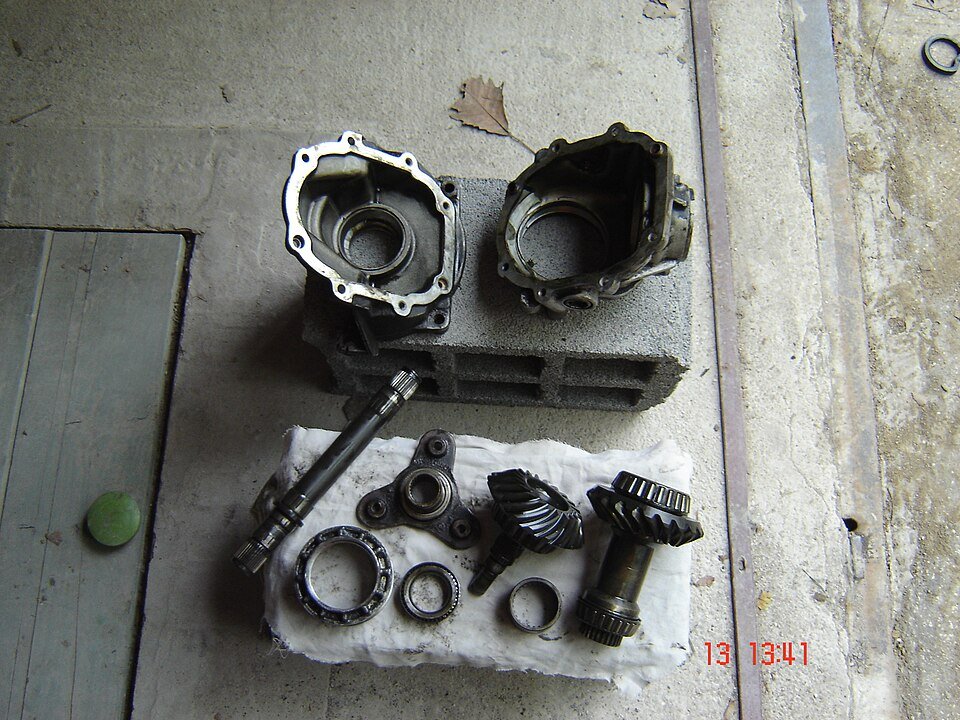
What noise, load and coast patterns can tell you
| Pattern noticed in normal driving | Possibilities to investigate | Limit of the observation |
|---|---|---|
| Whine that changes with road speed | Gear or bearing noise; other rotating driveline components | Pitch alone cannot identify the failed bearing or gear |
| Sound changes between gentle power and lifting off | Load-sensitive gear contact, bearings, joints or mounting behavior | It does not establish a specific preload or backlash fault |
| Hum or drone at steady speed | Tire tread, wheel balance, wheel bearings, propshaft or differential | A sound heard through the rear seat may originate elsewhere |
| Shake during acceleration | Propshaft, flexible couplings where fitted, axle joints, mounts, wheels or final drive | Acceleration vibration does not prove differential failure |
| Clunk when taking up drive | Mounting movement, joint wear or accumulated driveline clearance | Some movement exists by design; measurements need model-specific limits |
| Grinding, major shaking or loss of drive | A potentially serious mechanical fault | Stop safely and arrange recovery rather than testing further |
A whine that changes between driving and coasting can help a technician investigate gear contact and load-sensitive parts. It cannot reliably distinguish a pinion bearing from a gear problem just by listening in the cabin. Likewise, a sound that appears after warming up does not prove the differential has already suffered advanced wear.
Temperature, speed, road surface and load may all affect what you hear. Record those circumstances if they occur during ordinary driving, but do not deliberately recreate a dangerous condition. There is no single speed range that diagnoses every Mercedes differential, and no need for a driver to accelerate hard, weave or coast in neutral to provide useful information.
Changing road surface can change tire noise substantially. A noise that stays similar on different surfaces still needs investigation; it does not automatically rule tires out. Sound travels through suspension and body structures, so perceived location should be checked against inspection and professional noise localization.
Other faults that can mimic differential noise
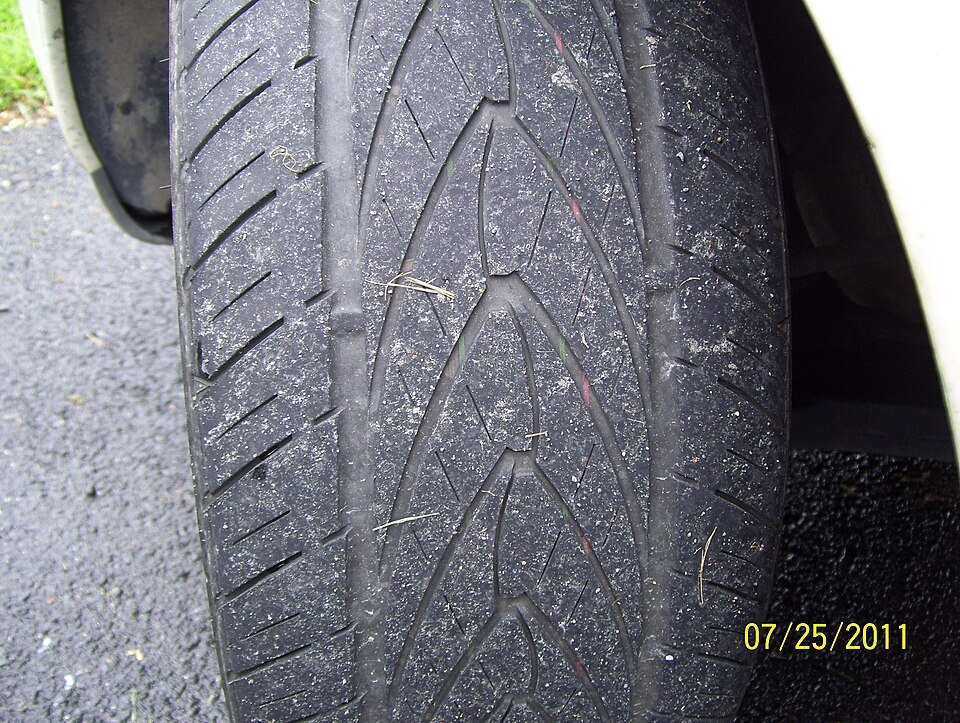
Tires and wheels: Uneven tread wear, damage, flat spots, imbalance or wheel runout can produce humming or vibration. Tire condition, pressures and the approved size combination should be checked, especially after recent tire changes. On an all-wheel-drive vehicle, confirm the permitted fitment and condition across the set rather than assuming any matching wheel diameter is sufficient.
Wheel bearings: A bearing can cause a road-speed-related hum that seems to come from the axle housing. Changes in cornering load can be a clue for a technician, but they are not a reliable owner test or proof of which side has failed. Inspection and localization are needed.
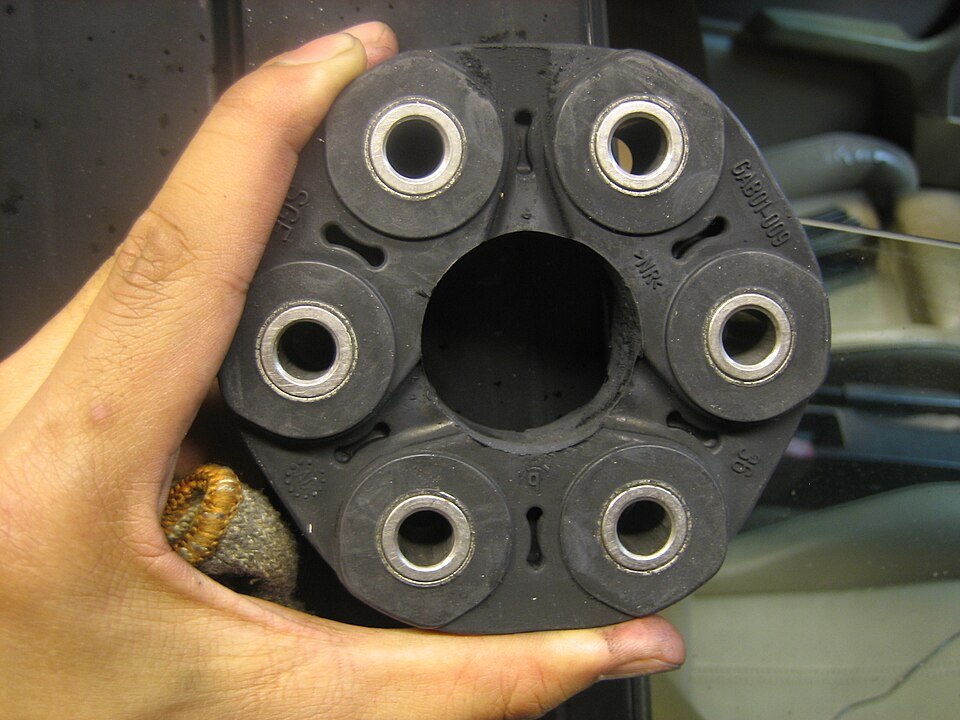
Propshaft and couplings: A propshaft, its center support where fitted, or flexible couplings can cause vibration under load. Ask what evidence distinguishes shaft-related vibration from the final drive before approving a differential replacement. The site’s Mercedes drive shaft service page covers that related repair area.
Mounts and contact with the body: Engine, transmission and differential mounts can change how normal drivetrain movement and vibration reach the cabin. A displaced exhaust or other component touching nearby structure can also create a misleading noise. A new drone after underbody work deserves a check of disturbed mountings and clearances.
Axle shafts, CV joints and brakes: Joint wear, damaged boots or a brake-related scrape can be mistaken for a final-drive problem. Transfer or coupling equipment on applicable 4MATIC systems is another possible source. Each should be considered according to the fitted drivetrain and the observed symptom.
Mercedes’ 2013 technical bulletin LI35.31-P-056961 lists multiple possible causes of drivetrain howling, humming and vibration, including wheel imbalance and propshaft-related conditions. It recommends professional noise localization. This supports comparing possible sources before replacing the differential; it is not a universal repair instruction for every Mercedes.
A separate 2014 bulletin LI35.30-P-059149 covers certain C117, 156, 176 and 246 vehicles with 4MATIC code M005. It describes vibration or throbbing associated with rear differential mounting, axle-shaft configuration or propshaft imbalance. Its limited applicability matters, and its existence shows why vibration under load cannot be treated as proof of worn internal gears.
A useful symptom record for the technician
Write down observations after parking safely. You do not need to repeat a maneuver or film while driving to produce a useful record.
- First appearance: when it started and whether it followed tire replacement, an impact or drivetrain work.
- Operating condition: cold or warmed up, road surface, and approximate speed already noticed during ordinary driving.
- Load relationship: whether the sound changed during normal gentle acceleration, steady travel or lifting off.
- Other evidence: a warning message, visible leak, vibration through the seat or steering wheel, or a sudden change in the sound.
If the noise also occurs while the vehicle is stationary, tell the workshop. That changes which rotating components could be involved. Do not rev the engine or raise the vehicle to perform your own isolation test.
How professional diagnosis should narrow the cause
A workshop should begin by deciding whether the vehicle is safe to move. Severe symptoms require a stationary inspection and an appropriate recovery plan. A road test is useful only when the technician considers it safe and can conduct it lawfully under suitable conditions.
- Document the complaint. Record when the sound began, where it seems loudest, whether it relates to road speed or engine speed, and whether it changed after a repair. Ask about leaks, impacts and warning messages.
- Inspect basic external causes. Check tires, wheels, visible leaks, mounts, relevant shaft joints and couplings. Look for damaged components, loose or incorrect installation and contact marks before proposing internal work.
- Localize the sound if safe. A controlled professional assessment with suitable listening equipment can compare locations and load conditions. Hard acceleration and aggressive steering are not required owner checks.
- Check the relevant lubricant. Confirm the correct fluid specification, level-check procedure and evidence of leakage. The technician may inspect an oil sample or drain plug when appropriate. Color, odor or a small deposit alone does not establish the exact failed component.
- Measure when the evidence warrants it. Excess play, bearing condition, gear contact, backlash or preload may need assessment against the applicable specifications. Some checks involve disassembly and should be separately explained and authorized.
- Present the findings. A useful report identifies the source, supporting observations, remaining uncertainty and repair choices. “It sounds like a differential” is a starting hypothesis, not a complete diagnosis.
A generic engine-code reader cannot establish the condition of mechanical gears and bearings. A more complete vehicle scan can still be useful when warnings or electronically controlled drivetrain functions are involved. Scan results and mechanical inspection answer different questions and should be considered together.
For an intermittent noise, ask whether it was reproduced and under what conditions. If it was not, agree on what evidence would justify further investigation. Replacing parts without reproducing or otherwise verifying the fault can leave the original symptom unresolved.
Arrange recovery for the fitted drivetrain
Tell the recovery provider if the vehicle is 4MATIC, has lost drive or has a suspected axle fault. Recovery methods depend on the model and failure. For example, the 2016 US GLC manual’s towing section requires truck or trailer transport when the transmission or an axle is damaged. Let the provider follow the exact vehicle’s instructions rather than assuming it can be towed with one axle raised.
When repair or differential replacement makes sense
Repair should follow the confirmed cause. A tire, mount or propshaft fault does not call for opening the differential. An external leak may require a seal repair, but the workshop should also assess why it leaked and whether low lubricant level affected internal components.
| Finding | Possible next step | Question before approval |
|---|---|---|
| Noise traced to tires, bearings, mounts or shaft components | Repair the identified source | What evidence excludes the differential as the main cause? |
| Leak with no confirmed internal damage | Address the leak and restore the specified lubricant level | Was related wear or play checked? |
| Serviceable internal bearing or gear damage | Specialist repair if parts and a supported setup procedure are available | What measurements and final checks will verify the repair? |
| Extensive damage or unsuitable repair economics | Compare a compatible replacement with the repair estimate | Are ratio, part number, condition and warranty documented? |
| Source remains uncertain | Agree on further diagnosis | What additional evidence is needed before ordering parts? |
Fresh oil cannot repair pitted gears or damaged bearing surfaces. A lubricant change may be appropriate maintenance or part of a repair, but a temporary change in sound does not prove that internal damage has been corrected. Do not add a generic friction modifier or thicker oil to mask the symptom; use only the specified fluid and any explicitly required additive for that unit.
A differential rebuild requires the relevant expertise, parts and measurement procedures. It is not simply a matter of installing new bearings and tightening everything until it feels right. Availability of a suitable repair route varies, so an automatic promise that every differential can be rebuilt is misleading.
Replacement units need more than a similar-looking housing. Confirm compatibility, including the final-drive ratio and any required electronics or setup. Ask whether a proposed unit is new, remanufactured or used, what its history is where known, and which written warranty covers parts and labor.
The estimate should separate diagnosis, any exploratory disassembly, parts, labor, lubricant and final checks. Request a revised quote if opening the unit reveals further damage. No universal price or same-day completion promise is useful before the exact vehicle and fault are known.
Maintenance and checks after the repair
Use the maintenance requirements and approved lubricants for the exact drivetrain. There is no single differential oil interval that covers every Mercedes, every axle or every duty cycle. If the schedule is unclear, ask the workshop to identify the applicable requirement rather than choosing a generic mileage from an unrelated model.
Have leaks and new noises assessed, maintain the specified tire pressures and approved tire fitment, and mention changes after wheel or drivetrain work. Dubai’s heat is relevant to operating conditions, but it does not prove that every warm-weather noise is caused by worn gears or that every small hum will rapidly become a major failure.
After repair, the workshop should confirm fluid level and leak status as applicable, check disturbed mountings, and reassess the original complaint under safe conditions. Compare the result with the same symptom description used at the start. If a noise remains, ask whether it is the same source or a separate finding rather than accepting another replacement by assumption.
Keep the diagnosis, part details, fluid specification and warranty terms with the service record. These details are more useful for future maintenance than a receipt that only says “rear axle repaired.”
Common differential noise questions
Does vibration under acceleration prove the differential is bad?
No. Propshafts, couplings, axle joints, mounts and other rotating components can produce load-related vibration. The source needs to be localized and checked before internal differential repairs are recommended.
Can I keep driving with a faint whine?
A faint whine cannot be declared safe from its description alone. Arrange prompt assessment and ask whether recovery is appropriate. Stop driving for grinding, severe vibration, binding, substantial leakage or loss of drive.
Will an oil change stop differential noise?
Only if the cause is something that the correct lubricant service can address. Oil cannot reverse mechanical wear. Establish the fluid requirement, level, leak status and condition of the unit first.
Should I accelerate hard to help the garage diagnose it?
No. Describe what you noticed during ordinary driving. Leave any necessary test to a professional who has assessed vehicle safety and can choose appropriate conditions.
Before approving differential work: ask where the noise was localized, which alternative sources were checked, and what finding justifies opening or replacing the unit. For severe symptoms, stop safely and arrange recovery.
Discuss a drivetrain noise assessment in Dubai
Contact MercGarage with your model year, drivetrain, symptoms and recent repair history. Ask about diagnosis and Mercedes differential repair options, including the inspection charge before work begins. For grinding, severe vibration or loss of drive, arrange recovery instead of driving to the appointment.