
Mercedes AC diagnosis · Dubai
Mercedes AC Not Working With Warm Air or Weak Cooling
Mercedes AC repair starts with the symptom: warm air, weak airflow or cooling that fades in traffic. Compare the checks, repair decisions and safety limits before approving refrigerant work or replacement parts.
If your Mercedes AC is not working, separate air temperature, airflow and changes with vehicle speed. Those clues guide diagnosis. They do not prove the car needs refrigerant, a compressor or a new filter.
Stop safely for smoke, a burning or fuel odor, an overheating warning or visibility that cannot be maintained. Follow the vehicle’s warning instructions and arrange assistance when it cannot be driven safely.
Strong airflow that stays warm directs attention to cooling and air mixing. Weak airflow points toward restriction, the blower or distribution doors. Cooling that fades in traffic makes condenser airflow an important check. Each pattern still needs testing before a part is condemned.
Match the symptom to the system
| What you notice | Systems to prioritize | What still needs testing |
|---|---|---|
| Strong airflow but warm air from every vent | Refrigerant circuit, compressor command, pressure sensing or temperature mixing | Fault memory, vent temperature, refrigerant quantity, leaks, pressures and commanded operation |
| Cold while moving but warm at idle or in traffic | Condenser airflow, electric cooling fan, condenser condition or heat-related pressure control | Fan command and speed, condenser obstruction, engine cooling condition and live pressure data |
| Weak airflow even at a high fan setting | Cabin filter, blower motor or regulator, evaporator icing or distribution doors | Filter condition, blower output, vent response and evaporator temperature |
| One side is warmer than the other | Zone temperature door or actuator, sensor input, calibration or uneven evaporator cooling | Left/right vent temperatures, actuator movement, scan data and refrigerant-circuit performance |
| Starts cold, then becomes warm | Evaporator icing, compressor regulation, pressure/temperature input or an intermittent electrical fault | Data during the failure, not only when the system is working normally |
| Fan speed changes but no air reaches the selected vents | Air-distribution doors, actuator or heating, ventilation and air-conditioning (HVAC) control | Commanded versus actual door position and physical airflow at each outlet |
Why a Mercedes AC can stop cooling
The climate-control panel requests a cabin temperature, but cooling depends on several systems working together. The compressor circulates refrigerant. The condenser releases heat outside the car. The expansion device controls flow into the evaporator, where cabin air is cooled and dehumidified. A blower pushes that air through a filter and a network of doors to the selected vents. Sensors and control modules decide how much each part should do.
Refrigerant loss from a leak
A low charge can reduce cooling and may eventually cause the system to inhibit compressor operation. Refrigerant does not tell you where it escaped. Connections, hoses, the condenser, compressor seal, evaporator and service ports are among the areas that may require inspection. A refill can temporarily restore cooling while leaving the leak untouched, so quantity and leak testing belong in the same diagnostic conversation.
Compressor or compressor-control fault
The compressor may be mechanically damaged, but modern systems can also lose cooling because a control valve, electrical supply or command signal is wrong. Some compressors do not use the obvious on-off clutch behavior found on older designs. A visual glance under the hood is therefore not enough to condemn one.
Condenser, cooling fan or airflow problem
The condenser must move heat from the refrigerant to outside air. Bent or obstructed fins, a fan that does not reach the requested speed, or an engine-cooling problem can make high-temperature, low-speed operation difficult. This group deserves early attention when the AC improves as soon as the car moves.
Pressure sensor, temperature sensor or electrical control
The control system uses pressure and temperature information to protect components and regulate cooling. A failed sensor, damaged wiring, poor connection, control-module fault or implausible signal can prevent the requested compressor or fan operation. A scan can reveal the direction of the fault, but the sensor and its circuit still need testing.
Expansion device or internal restriction
The expansion valve or other metering device controls how refrigerant enters the evaporator. A restriction, moisture or internal contamination can create misleading pressure and temperature patterns. That is why generic pressure targets copied from another vehicle are not a sound basis for parts replacement.
Cabin filter, blower and air doors
A loaded cabin filter or weak blower reduces the amount of air reaching you even if the evaporator is cold. A stuck distribution or temperature door can send air to the wrong outlets or mix heated air into one cabin zone. These are airflow and HVAC-box problems, not automatic evidence of a refrigerant fault.
Why cooling can fade in traffic
At road speed, air naturally passes through the condenser. In slow traffic, the electric cooling fan must create much of that airflow. If fan output is missing or too low, or the condenser cannot release heat effectively, cooling may weaken at idle and recover on the highway.
This pattern is a clue, not a verdict. Incorrect refrigerant quantity, a weak compressor, pressure-control faults and engine overheating can produce a similar complaint. The useful test is to reproduce the symptom while watching fan command, fan speed, relevant temperatures and refrigerant pressures together.
Weak air is not the same as warm air
Turn the fan up and pay attention to volume, not just temperature. If the blower becomes louder but little air reaches the vents, look at restriction or distribution. If airflow itself does not increase, the blower motor, regulator, electrical supply or control request needs attention. If airflow begins normally and fades during a long drive, an evaporator-temperature or icing problem is possible.
A cabin filter can explain reduced volume, but it cannot confirm why strong airflow is warm. Replacing it is sensible when inspection shows it is loaded or the maintenance schedule calls for it; it should not be sold as a cure for every cooling complaint.
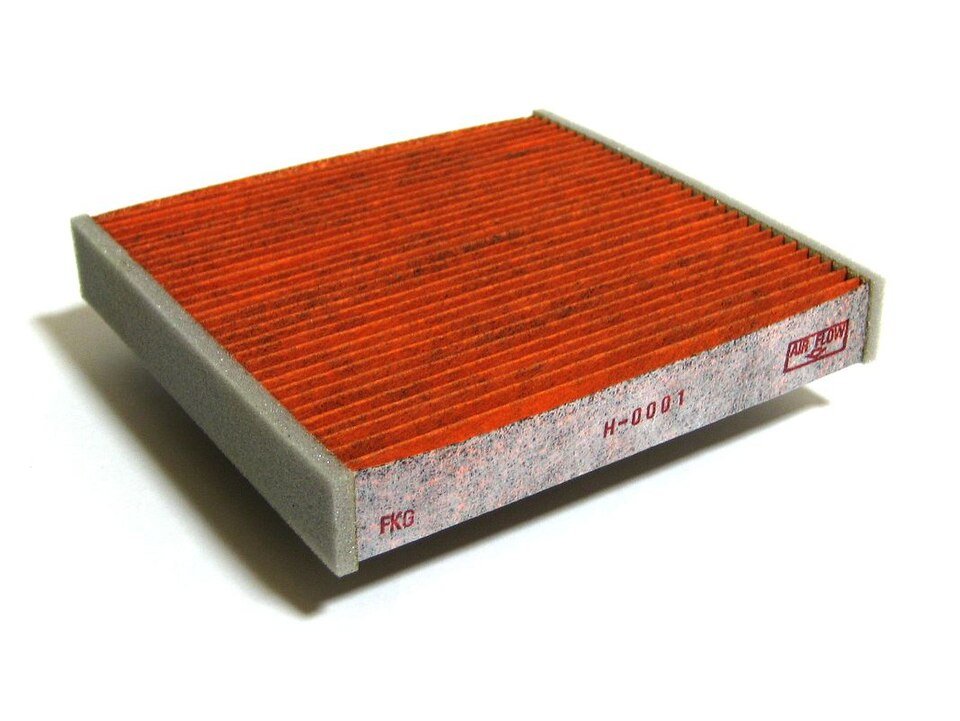
Photo: Qurren, CC BY-SA 3.0. Resized reference photograph.
Wet footwells and odors need separate checks
Water in a footwell is not proof that the AC needs refrigerant or a new evaporator. A condensate-drain concern is one possibility, but rainwater entry, body drains or a coolant leak can require a different investigation. Tell the workshop whether the moisture follows AC use, rain or washing, and whether coolant level or engine temperature has changed.
- Musty smell after parking: ask for filter, moisture and drain assessment. A deodorizer alone does not establish that the cause has been corrected.
- Wet carpet: identify the liquid and its entry path before authorizing AC dismantling. Do not probe drains blindly or spray cleaner into electrical areas.
- Burning, fuel or exhaust odor: stop safely and arrange assistance, especially with smoke, dizziness or a dashboard warning. Do not mask the smell with a fragrance or continue a test drive.
These observations belong alongside the cooling complaint, but they do not replace cooling measurements. Ask for the moisture or odor finding to be recorded separately so unrelated work is not bundled into an automatic recharge recommendation.
Safe checks you can make without opening the system
- Confirm the A/C function is on. Select a low temperature and AUTO or a clear manual fan setting. Control layouts vary by model, so use the vehicle’s own operator’s manual rather than a universal button sequence.
- Compare the vents. Check center, side and rear outlets where fitted. Note differences between driver and passenger zones.
- Change fan speed. Separate a temperature problem from a volume problem by checking whether airflow responds across several settings.
- Compare idle with steady driving. Record whether cooling returns once road speed increases. Do not watch gauges or operate menus while driving; have a passenger observe or check after stopping safely.
- Look for a dashboard warning. An engine-temperature warning changes the priority because the cooling fan and front heat exchangers are related to engine heat management as well as cabin cooling.
- Describe the timing. “Cold for 20 minutes, then weak” or “warm only at idle” gives the technician a condition to reproduce.
Do not release refrigerant, bridge a pressure switch or add a refill can simply because the vents are warm. The correct refrigerant type and specified charge vary by vehicle, and overcharging or contamination can create a second problem. Hybrid and electric Mercedes models also use high-voltage components that require the appropriate training and isolation procedures.
What a proper AC diagnosis checks
A good diagnosis works from the complaint toward the failed condition. It does not start by replacing the most familiar part.
1. Reproduce and measure the symptom
The technician records ambient conditions, control settings, center-vent temperature, airflow and the point at which performance changes. Left/right temperature differences and idle-versus-road behavior should be noted before the system is disturbed.
2. Scan the relevant control units
Climate-control, engine, fan and power-management faults can all matter. Live data can show requested compressor output, refrigerant pressure, evaporator temperature, door positions and fan requests where the vehicle makes those values available. A stored code is evidence to investigate, not permission to replace the named component.
3. Inspect airflow and heat rejection
The filter, blower response, vent distribution, condenser face and cooling-fan operation are checked. On a traffic-related fault, the inspection must include commanded fan behavior under the conditions that make cooling fade.
4. Verify refrigerant quantity and look for leaks
System pressure changes with ambient temperature, load and compressor control; a pressure reading alone cannot prove the exact charge. When the diagnostic path calls for it, refrigerant is recovered with suitable equipment and weighed, the system is evacuated and the specified quantity is restored. Leak detection may use an electronic detector, approved tracer method or forming gas, depending on the vehicle and fault.
5. Test the suspected circuit or component
Electrical supply, ground, wiring, connector condition, sensor plausibility and commanded operation are tested before a compressor, fan, actuator or control unit is approved for replacement. The exact procedure depends on VIN, model year, engine or high-voltage architecture and refrigerant specification.
6. Verify the repair in the original conditions
The final check should repeat the settings and operating condition that exposed the fault. For a traffic complaint, a brief cold-air check inside a stationary workshop is not enough. The repair should be followed by a scan, leak or pressure check where relevant, and a performance test.
| Test | What it can show | What it cannot prove alone |
|---|---|---|
| Fault-code scan | Recorded electrical, sensor or control faults and useful live data | That the part named in a code has failed |
| Vent-temperature test | Actual cooling performance and zone differences | The location of a refrigerant leak or electrical fault |
| Pressure readings | How the circuit behaves under defined conditions | The precise refrigerant quantity without recovery and weighing |
| Leak test | A leak at the points and conditions tested | That every other component is healthy |
| Fan command and output check | Whether requested condenser airflow is being produced | That refrigerant quantity and compressor performance are correct |
Choose the repair that the findings support
The repair should follow the failed condition. If airflow is restricted by the fitted cabin filter, replacing that filter may restore volume without opening the refrigerant circuit. A damaged connector or verified sensor-circuit fault needs an electrical repair, followed by a check that the requested function now responds.
A confirmed refrigerant leak needs a repair at the identified location and the appropriate recovery, evacuation and recharge procedure. A cold vent immediately after filling proves short-term cooling performance; it does not establish that a leak has been corrected. Ask what evidence supports the leak location and what verification follows the repair.
Compressor replacement needs a stronger explanation than “the air is warm.” Ask whether the compressor received the correct command, whether electrical supply or control was checked, and whether the system had the appropriate refrigerant quantity. The diagnosis should explain why those findings point to internal damage rather than an external control fault.
Repairing a separately serviceable control part may be appropriate on some compressor designs, while others require an assembly replacement. A rebuilt unit is an option only when a suitable unit and a documented repair process exist for that application. Availability alone does not establish compatibility, cleanliness or warranty coverage.
If internal contamination is found, the quote should identify the affected circuit and the vehicle-specific cleaning or replacement procedure. Not every component can be flushed, and a routine warm-air complaint does not justify flushing the whole system. Ask what contamination was observed and why each additional part is included.
Compare the full job scope
- Diagnosis: specify the reported symptom, tests included and whether further dismantling needs separate approval.
- Parts: identify the exact component, part choice and any confirmed warranty terms.
- Refrigerant work: state the specified refrigerant, required handling and whether recovery, evacuation and charging are included.
- Verification: include a repeat performance check in the conditions that exposed the fault and relevant leak or electrical checks.
- Total: request labor, consumables and VAT on a clearly itemized written estimate.
A low headline recharge price can be a different service from fault diagnosis and leak repair. Compare like-for-like scopes before deciding. Ask for a current written estimate for the identified fault; a previous promotion does not establish today’s price or inclusions.
Match the procedure to the actual Mercedes
Give the workshop the vehicle identification number (VIN), full model designation and build information. Registration year alone does not settle the refrigerant, compressor design, climate-control equipment or powertrain. Imported cars can also differ from a locally supplied vehicle with a similar badge.
The refrigerant label and applicable Mercedes service information establish the correct charge and service procedure. Do not select a refrigerant or oil by comparing photographs of another car. Different refrigerants need compatible equipment, and an electric compressor can have requirements that differ from a belt-driven unit.
On a hybrid or electric vehicle, cabin cooling can interact with additional thermal-management functions. A general cold-air check is not a complete assessment of those systems. High-voltage warnings require the vehicle’s instructions and appropriately qualified diagnosis, even if the cabin still feels comfortable.
Normal operation also varies with settings and conditions. A cabin heated by parking in the sun may take time to cool, while changing fan speed, recirculation or zone settings changes the result. Compare performance under recorded conditions instead of treating a single universal vent-temperature number as proof of failure.
When to switch the AC off or stop driving
Warm air by itself usually does not mean the car must be stopped immediately. Switch the AC off and arrange prompt inspection for a grinding or heavy mechanical noise. If there is smoke, a burning smell, fuel or exhaust odor, stop safely, switch off the vehicle and arrange assistance; move away if fire is suspected. Stop safely and follow the dashboard instruction if the engine-temperature warning appears. A failing cooling fan or obstructed heat exchanger can affect more than cabin comfort.
For demisting, loss of dehumidification can also reduce windshield-clearing performance. If visibility cannot be maintained, do not continue until the glass is clear and the car can be driven safely.
Use the symptom to choose the next test
Record what changes, keep safety warnings first and ask which finding justifies the proposed repair. A scan, pressure reading or cold vent answers only part of the question. The completed repair should be checked under the conditions that originally exposed the fault.
Mercedes AC diagnosis in Al Quoz
Tell us when the cooling changes
Send the model, year and whether the air is warm, weak, one-sided, intermittent or worse in traffic. MercGarage can test the symptom before recommending refrigerant work or replacement parts. Our Mercedes AC diagnosis and repair covers workshop assessment and the resulting repair options.
Mercedes AC questions
Why is my Mercedes AC cold while driving but warm in traffic?
Road speed pushes air through the condenser, while slow traffic relies more on the electric cooling fan. A fan or condenser-airflow problem moves high on the list, but refrigerant quantity, compressor control, system pressure and engine-cooling condition still need to be checked before a part is selected.
Will an AC regas fix warm air?
Only if incorrect refrigerant quantity is the reason for the poor cooling. A regas will not repair a leak, failed fan, sensor, compressor-control fault, blocked airflow path or temperature door. If the charge is low, the next question is why.
Can a dirty cabin filter make the Mercedes AC feel weak?
Yes. A loaded filter can reduce air volume and slow cabin cooling. It does not normally explain strong airflow that stays warm, so temperature and airflow symptoms should be separated before diagnosis.
Why is one side of the cabin warmer than the other?
A zone door or actuator, its position feedback, calibration or a sensor input may be responsible. Uneven evaporator cooling can also create side-to-side differences. Comparing vent temperatures and scan data is more reliable than assuming the blend door has failed.
Why does the AC start cold and then turn warm?
The fault may appear only as temperatures and pressures change. Evaporator icing, compressor regulation, a pressure or temperature input, fan operation and intermittent wiring are possible areas. Data needs to be captured while the air is warm.
Can I check the refrigerant level from a pressure gauge?
Not accurately. Pressure varies with ambient temperature, operating state and system design. Correct charge verification may require controlled recovery and weighing against the vehicle specification, followed by leak and performance checks.
Is it safe to use a DIY AC refill can?
It is not a sound diagnostic method. The can does not identify a leak or confirm the refrigerant already in the system, and an incorrect product or overcharge can complicate the repair. Refrigerant should be identified, recovered and charged with equipment suitable for the vehicle.
Technical references
Mercedes control layouts and operating functions vary by model and equipment. Use the vehicle-specific manual; Mercedes-Benz explains access to its Digital Owner’s Manuals and Guides app.
The MAHLE automotive air-conditioning technical guide describes the refrigerant circuit, condenser-fan role, pressure-based diagnosis and professional leak-detection methods.
The US EPA motor-vehicle AC servicing overview explains why refrigerant servicing uses controlled handling and recovery practices. Local requirements may differ; the reference is used here for the service principle, not as UAE legal advice.