Mercedes guide
Mercedes C250 Maintenance Checklist for Owners
A vehicle-specific C250 maintenance checklist for service reminders, oil approval, filters, brakes, fluids, timing-drive questions and incomplete records. Compare due work with evidence before approving a quote.
A useful C250 maintenance checklist starts with the car in front of you. Note its VIN, model year, engine, mileage, service message and the work recorded on past invoices. Then compare those details with the maintenance booklet for that vehicle. A Service A or Service B reminder tells you a visit is due, but it does not prove that every filter, spark plug or fluid is due at the same time.
Use the checks below to prepare for a service discussion or to review a proposed invoice. The list separates scheduled maintenance from wear and fault diagnosis. It does not set one mileage interval for every C250 sold in the UAE.
Start with the exact C250
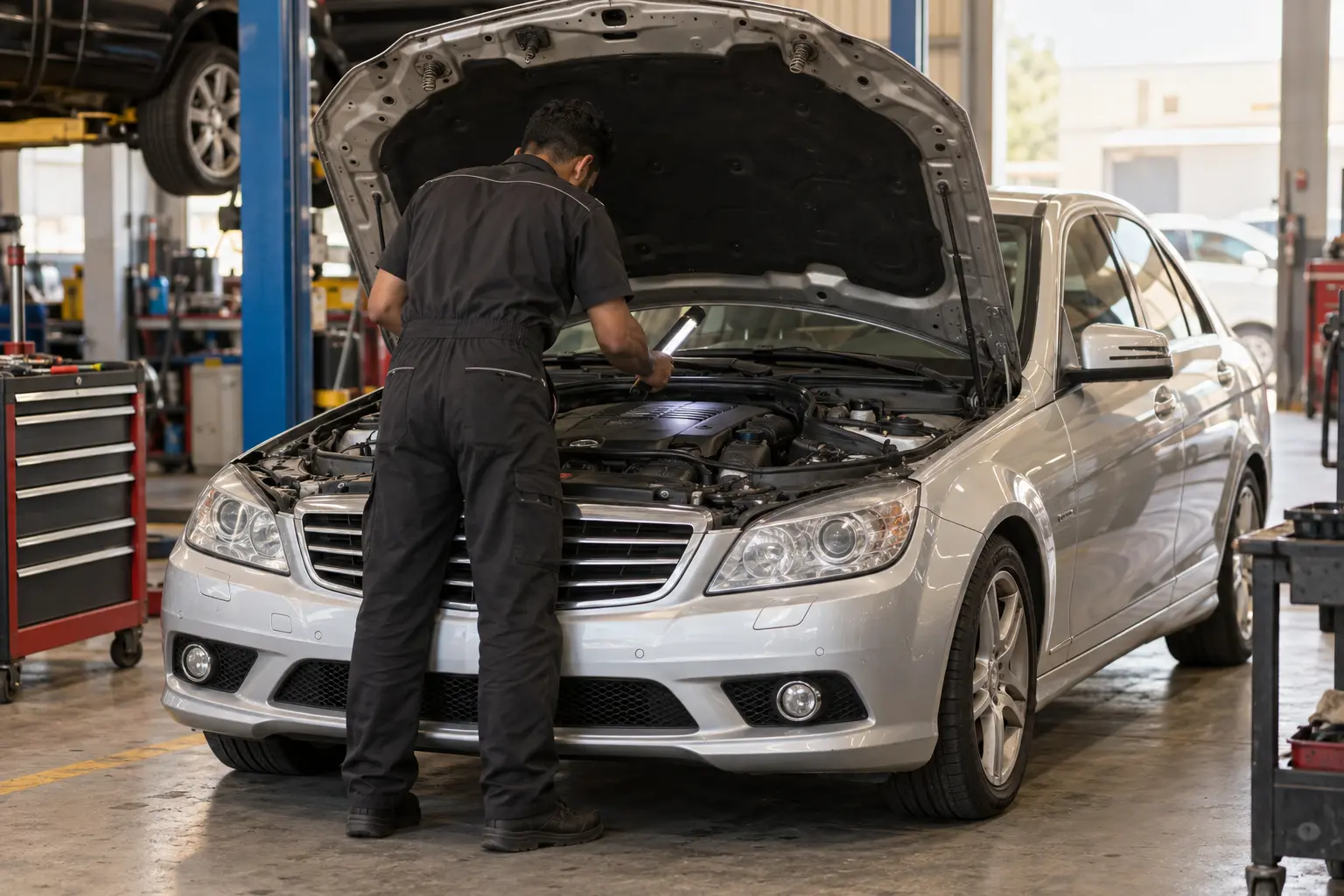
C250 badges appear on cars with different body styles, engines and equipment. Registration year alone can be misleading on an imported car. Ask the workshop to identify the engine and transmission from the VIN before it chooses fluids, filters, spark plugs or gearbox parts. The service booklet and market specification matter as much as the badge.
- Record the basics. Save the VIN, odometer reading, registration year, fuel type and the exact service message. A photograph of the dashboard helps if the wording disappears after starting the car.
- Find the last completed work. Check invoices for dates, mileage, part descriptions and fluid approvals. A stamp or a reset reminder without an itemised record may leave a question about what was actually done.
- Separate petrol from diesel. A petrol C250 may have scheduled spark plugs. A C250 CDI diesel does not have petrol ignition plugs and may have different filter and emissions-system requirements. Confirm the fitted engine before accepting a generic C250 checklist.
- Check the local specification. Manuals and online schedules for another country can explain the maintenance system, but they cannot by themselves establish the exact UAE or imported vehicle’s due work.
Mercedes-Benz provides model-year service booklets that show how vehicle-specific maintenance is documented. Use the booklet that belongs to the identified car and its market, then reconcile it with the car’s actual record.
Read the service reminder correctly
The ASSYST or ASSYST PLUS display is a starting point for the visit. It should be read alongside elapsed time, distance, the service booklet and the last invoice. A reset after an oil change does not prove that separately due brake fluid, plugs or transmission work was completed. Equally, a warning light or an overheating complaint needs fault diagnosis even if the next routine service is months away.
Before agreeing to work, ask the workshop to divide its list into three groups. The first is work due under the identified car’s schedule. The second is a worn or damaged item supported by a measurement or inspection finding. The third is diagnostic work needed to explain a symptom. This simple distinction makes the quote easier to judge without deferring genuinely due maintenance until something fails.
Engine oil and filtration
Check the oil approval required for the fitted engine, the proposed product and the quantity. Viscosity alone does not establish that an oil is approved. Ask for the oil and filter to be named on the invoice, along with the date and mileage. If the oil level has been falling between services, record the amount and distance rather than assuming a thicker grade will solve it. A leak or consumption concern needs its own investigation.
The engine air filter and cabin filter have different jobs. An engine filter may need inspection for contamination and seating, while a blocked cabin filter can reduce airflow from the vents. Dusty use makes inspection worthwhile, but it is not proof that both must be replaced at every oil service. Ask which filter was inspected, what was found and whether replacement is scheduled or condition-based.
Plugs, belts and visible leaks
For a petrol C250, compare the spark-plug replacement record with the interval specified for the identified engine. A car that drives normally can still have plugs due by its schedule. Conversely, a rough idle does not prove that new plugs alone will cure the fault. Ignition, air, fuel and mechanical checks may be needed when a misfire is present.
Ask for accessible auxiliary-belt condition and visible oil or coolant leak paths to be inspected during an appropriate visit. A worn auxiliary belt is different from the engine’s timing drive. Do not accept a quote for a generic C250 timing-belt service merely because a mileage milestone has passed. The fitted engine and the actual component must be established first.
Brake and tyre checks
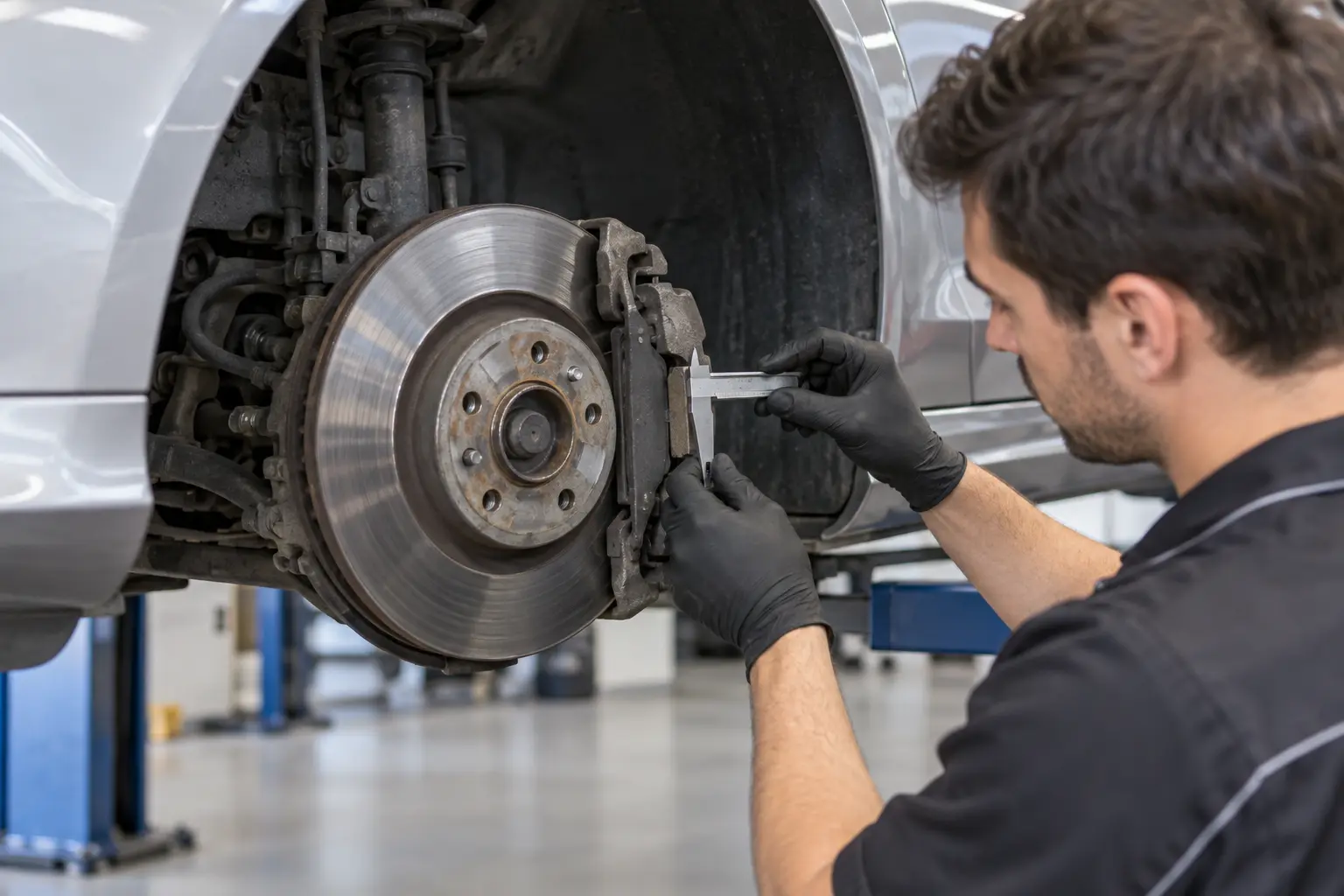
Brake pads and discs are wear items, so a replacement recommendation should refer to the measured condition of the relevant axle. Ask whether the quote covers pads alone or also includes discs, sensors and any caliper work. A pull, vibration or scraping sound can have more than one cause and should be investigated before parts are selected.
Check the date of the last brake-fluid change against the applicable time-based schedule. A normal-feeling pedal does not tell you when the fluid was last replaced. Look for leaks and any brake warning as separate safety questions. If braking is impaired, stop driving and arrange assistance rather than waiting for a routine appointment.
Tyres deserve a look at tread condition across each tyre, pressure, age and the wheel sizes fitted to the car. Uneven wear may justify a suspension or alignment inspection, but an alignment cannot repair a loose joint or damaged tyre. Rotation is appropriate only when the tyre sizes, directional markings and wheel arrangement allow it. Record the finding instead of accepting automatic rotation as a universal service item.

Cooling, battery and AC
Check the coolant level only in the manner described by the vehicle manual, and never open a hot pressurised system. A repeated drop, dried residue or rising temperature needs investigation rather than repeated top-ups. Correct coolant specification and mixing requirements depend on the vehicle. An overheating warning calls for a safe stop and recovery advice.
A battery test can be useful when starting is slow or several low-voltage warnings appear together. Ask whether the workshop tested the battery and charging system before replacing parts. If the car has an intermittent electrical drain, that investigation is separate from a routine battery check. A replacement battery must match the vehicle’s required type and any setup procedure.
Weak air conditioning also needs a clear description. Little air from the vents suggests a different first check from strong airflow that stays warm at idle. The cabin filter, blower, condenser airflow, fan operation, refrigerant circuit and controls have different roles. Refrigerant should not be added as a routine maintenance item without establishing why cooling is poor and following the fitted system’s procedure.
Transmission and other fluids
Identify the gearbox before a fluid or filter service is quoted. Check the last recorded transmission work against the applicable schedule and the fitted unit’s specified fluid and procedure. If service is due, a car that shifts normally is not a reason to wait for a failure. If it is not due, a generic flush should not be added automatically.
A jerk, hesitation or warning requires diagnosis rather than a promise that changing fluid will cure it. The technician may need to distinguish transmission behaviour from engine running, mountings or an electrical issue. The same principle applies to other scheduled fluids. Confirm whether the recommendation comes from a maintenance document, an actual test result or a symptom.
Confirm the timing drive
Mercedes-Benz’s 2014 C250 1.8L engine parts listing identifies timing-chain components for that specified car. It does not establish the arrangement or a replacement interval for every vehicle carrying a C250 badge. The engine code and VIN come before any timing-drive recommendation.
A start-up rattle, running problem or related fault code deserves a model-specific assessment. None of these symptoms alone proves that the chain needs replacement. Ask which findings support the recommendation, which components are included and whether the quote covers diagnosis as well as repair. Do not transfer an online belt interval from a different Mercedes engine to this car.
If the service history is missing
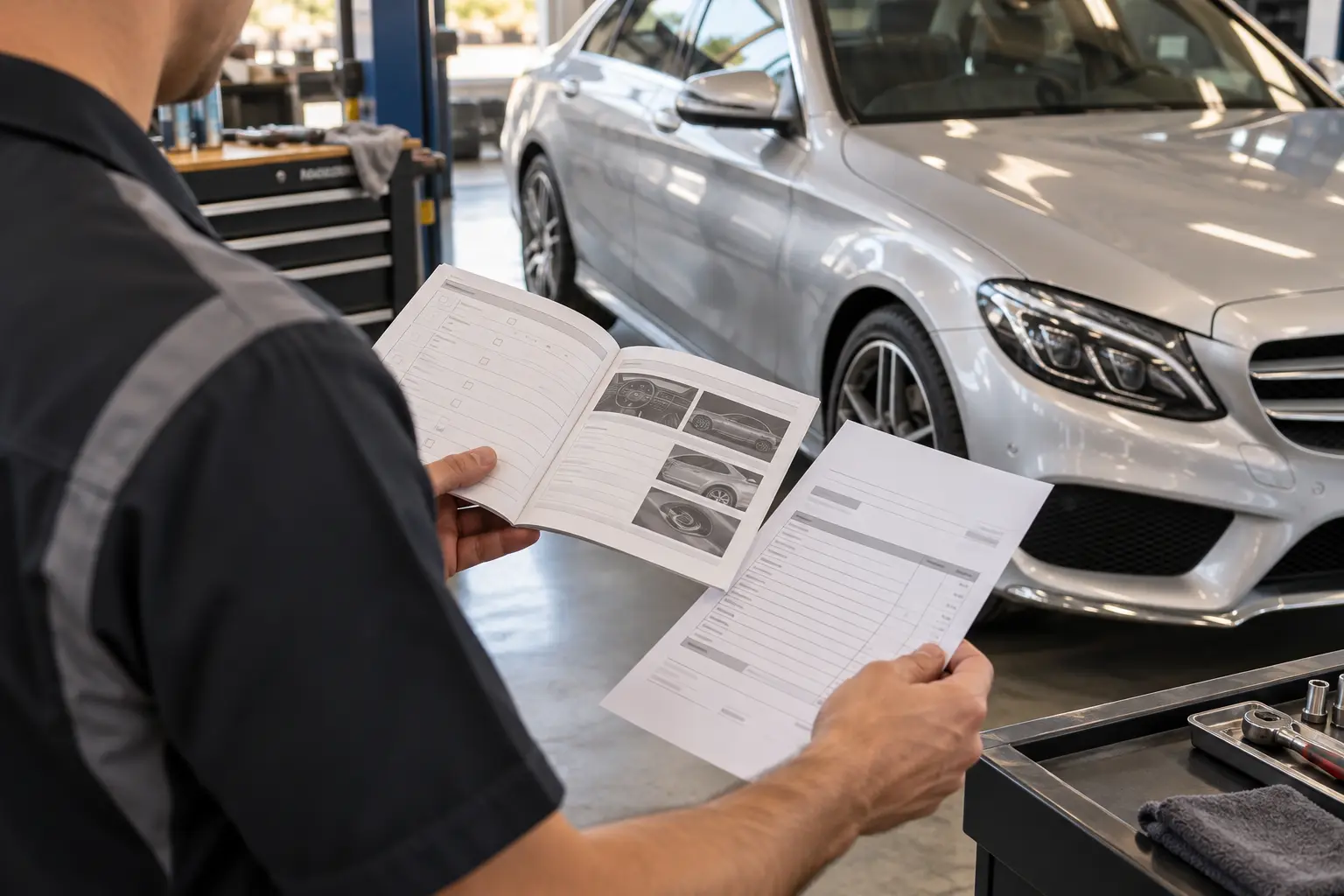
A newly purchased C250 may have an incomplete paper trail. Start by collecting the dashboard service information, any digital or paper records, seller invoices and the current mileage. Ask a workshop to identify overdue work from the applicable schedule and inspect safety-related wear. It can then make a staged list rather than selling an undefined major service.
- Resolve immediate concerns. Brake faults, overheating, red oil-pressure warnings and severe running problems take priority over routine planning.
- Establish due maintenance. Match oil, filters, brake fluid, plugs where fitted and gearbox work to the car and whatever records survive. An absence of proof is a reason to investigate the history, not to invent a last service date.
- Measure wear. Record brake and tyre findings, visible leaks and battery results. Request a reason for each replacement recommendation.
- Keep the first invoice detailed. It becomes a reliable starting point for the next visit, even when the earlier record cannot be reconstructed.
What to check on the quote
An itemised estimate should show the vehicle identification, the reason for each job, parts and fluid descriptions, labour, any diagnostic time and the 5% VAT treatment. It should distinguish inspected items from replaced items and state what is excluded. If the work changes after inspection, ask for the findings and a revised total before authorising more work.
Keep the estimate with the final invoice. Check the completed items, oil approval and quantity, fluid specifications where relevant, dates, mileage and the final VAT basis. These details let the next workshop see what has already been done and help you avoid paying twice for a vaguely described package.
Common questions about C250 servicing and maintenance records
Does Service B include every fluid and filter
No universal package can answer that for every C250. Ask for the vehicle-specific task list and the separately due items. The service label alone does not show when the plugs, brake fluid or transmission work were last completed.
Can a service reminder be reset before the work
A reset changes the display, not the maintenance history. Record and complete the due work first, then reset the reminder through the appropriate procedure. A safety or engine fault warning needs its own diagnosis.
Should I replace a timing belt at a fixed mileage
Do not apply a generic belt interval to the C250 badge. Confirm the exact engine and its timing-drive design. The cited 2014 1.8L parts listing shows chain components for that specified vehicle, while another variant requires its own identification.
What if the car has a fault but service is not due
Describe the warning, when it appears and any change in braking, temperature or drivability. A fault investigation is separate from scheduled servicing. For impaired braking, overheating or a red oil-pressure warning, stop safely and seek recovery advice.
Arrange a vehicle-specific C250 maintenance check with records
For a C250 with missing records or an unclear maintenance recommendation, review the workshop’s C250 service options and ask for the due-work list for your vehicle. The year, mileage, service message and any recent invoice help the team start with the right question.