SURFACE
Transfer, haze, or wash marking
The mark may sit on top of the clear coat rather than inside the paint.
Clean and correct first
Preserve the original finish when safe correction can remove or reduce the mark.
AED 250–450
MERCEDES PAINT DAMAGE · AL QUOZ 4
A scratch does not automatically mean repainting the panel. We identify whether the damage sits on the surface, inside the clear coat, through the color, or down to the substrate, then quote the smallest repair that can deliver the agreed finish.
01 / SCRATCH DECISION LAB
This board connects what you can see with the likely paint layer and the most useful next step. It is a triage guide, not a substitute for inspection under clean, controlled lighting.
The mark may sit on top of the clear coat rather than inside the paint.
Preserve the original finish when safe correction can remove or reduce the mark.
The protective clear layer may be marked, but polishing depth must remain safe.
Choose improvement or refinishing based on depth, location, and expected finish.
Polishing cannot replace paint that has been removed from the base coat.
Decide between limited protection, a localized blend, or a full-panel finish.
A deep gouge may also hide a dent, crack, previous filler, or corrosion.
Quote substrate work, paint area, trim, and any related body repair separately.
03 / BUILD THE QUOTE
Send the facts that change the job, not only a close-up of the line. A useful quote explains which variable moved the price and why.
Start with three photosOne close, one full-panel, and one angled image in natural light. The final quote still follows physical inspection.
Surface transfer, clear coat, color, primer, metal, or plastic determines how much material must be restored.
A short center-panel mark differs from damage across an edge, body line, handle, molding, or two panels.
Solid, metallic, pearl, three-stage, matte, and satin finishes need different color and blending control.
Old filler, a prior respray, peeling clear coat, or mismatched color can expand preparation and repair area.
A dent, crack, corrosion, loose trim, or damaged sensor bracket moves the work beyond scratch repair.
Paint-protection film, wrap, decals, pinstripes, and ceramic coating may require separate work.
04 / WHAT YOU RECEIVE
Before approval, you should know the method, repair area, expected finish, total price, VAT, timing, and exclusions. At handover, the completed work should match that written scope.
A clear explanation of whether the mark is surface transfer, clear-coat damage, missing color, or substrate exposure.
Correction, touch-up, localized repair, or panel refinish, including why the smaller or larger option is suitable.
The approved repair price with 5% VAT and separate items identified before additional work begins.
Clarification of whether the goal is improvement, protection, a controlled local blend, or full-panel refinishing.
A handover review against the approved area and finish, including visible repair edges or remaining limitations.
The completed work, supplied materials where stated, and applicable warranty duration, exclusions, and claims process.
05 / TRUST EVIDENCE LEDGER
This distinction prevents planning examples and representative images from being presented as completed customer repairs.
If authentic job cards, original before-and-after images, customer permission, and invoice details become available, they should replace the hypothetical examples. Until then, the page keeps estimates and case studies separate.
06 / PLANNING ESTIMATES, NOT CASE STUDIES
These scenarios demonstrate repair logic. They are not completed customer jobs, invoices, or guaranteed offers. Hidden damage, prior bodywork, coating, film, and additional panels remain separate.
2020 C200 · BLACK DOOR
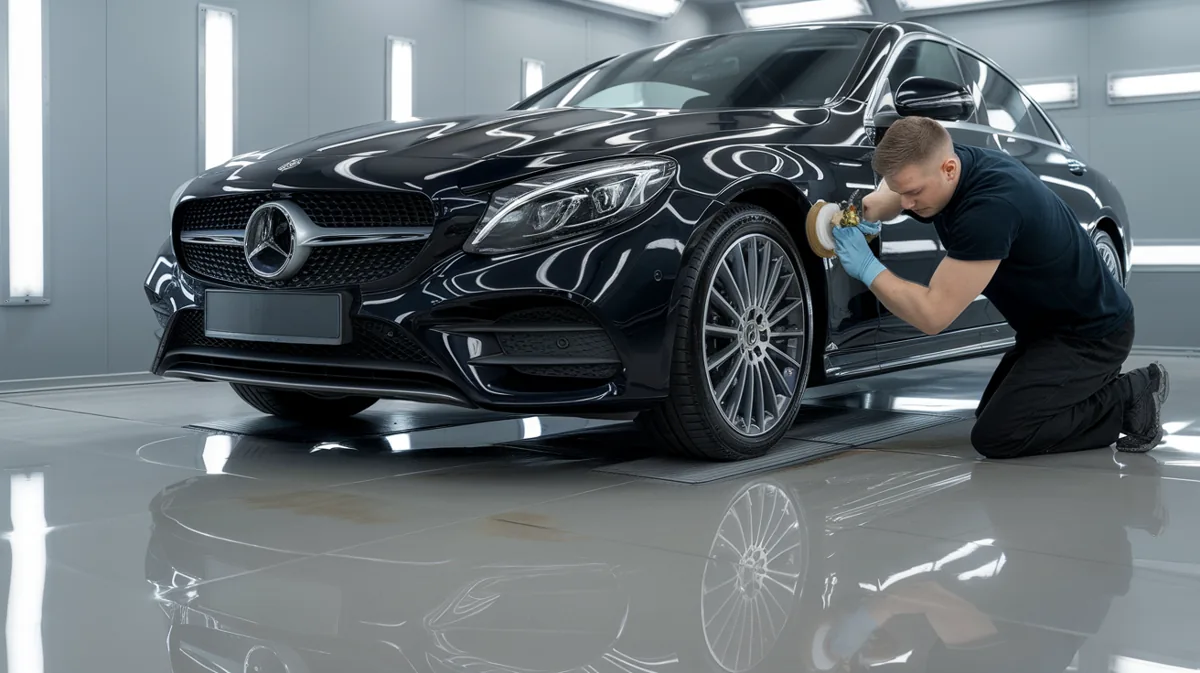
Visible concern: light transfer with no missing color after cleaning.
Assumed method: controlled localized machine correction and finish check.
2018 GLC 300 · WHITE BUMPER CORNER
Visible concern: color is missing, with no crack, deformation, or sensor fault.
Assumed method: localized preparation, color, clear coat, curing, and finish correction.
2022 E300 · METALLIC DOOR
Visible concern: a gouge crosses the panel with missing color and visible primer.
Assumed method: full door preparation and refinish with matched metallic color and clear coat.
All three planning ranges include the stated method, standard labor, and 5% VAT. Turnaround begins after inspection, approval, and material availability.
07 / FINISH ACCEPTANCE STANDARD
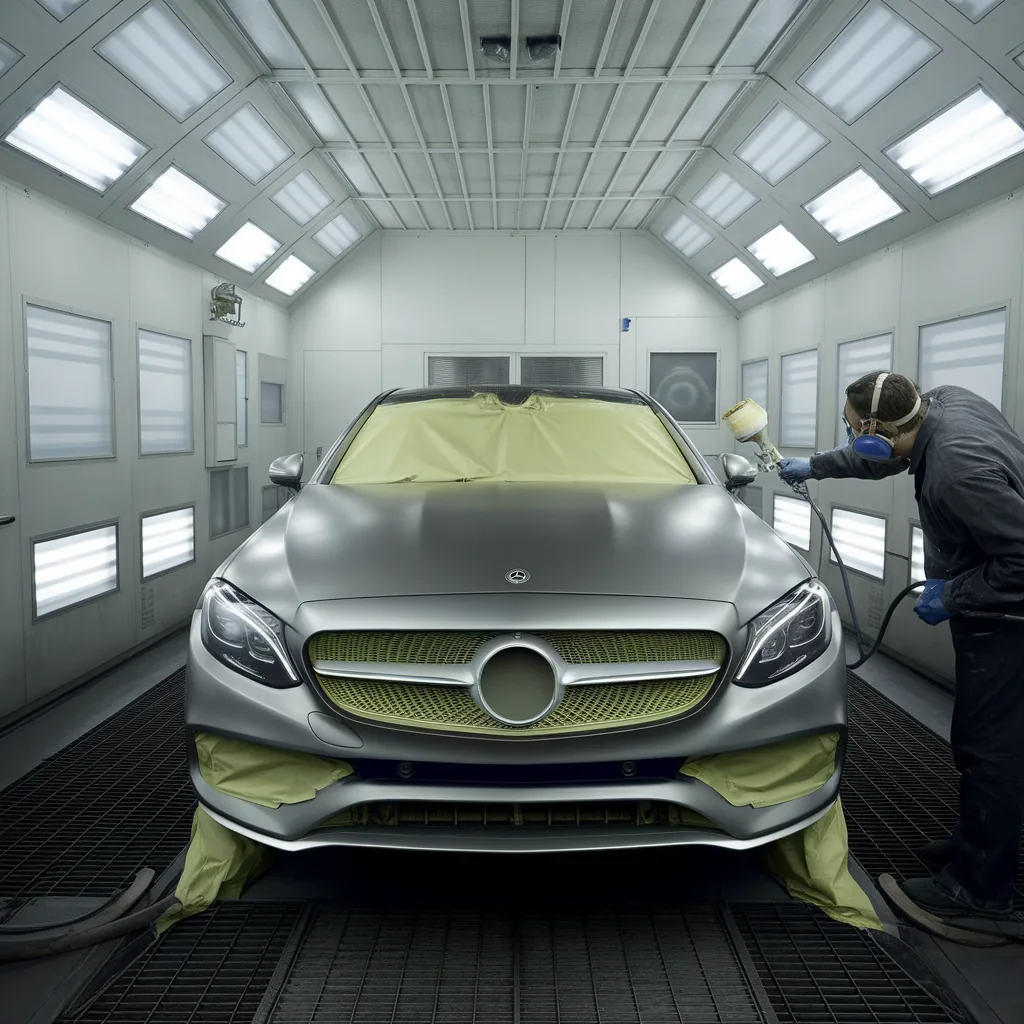
A touch-up and a full-panel refinish have different finish targets. The handover should confirm what was promised rather than relying on a general claim that the scratch was fixed.
08 / THREE-PHOTO QUOTATION DESK
Photos can identify the likely route and a preliminary range. The physical inspection confirms paint condition, previous repair, substrate, and final price.
Do not apply wax, colored polish, or a repair pen before taking the photos. Clean loose dirt gently without aggressive rubbing.
Show the deepest part, exposed color, primer, metal, or plastic, and a familiar object for scale.
Show the complete door, fender, bumper, hood, or quarter panel so position and repair boundaries are clear.
Use a reflection across the surface to reveal dents, waves, haze, and how the scratch changes with angle.
09 / WHEN SCRATCH REPAIR IS NOT ENOUGH
A visible scratch may sit on a dent, cracked bumper, displaced panel, broken sensor bracket, sharp edge, or collision damage. These conditions need a wider repair plan.
For a dent with intact paint, compare Mercedes paintless dent repair. For a cracked, distorted, loose, or sensor-related bumper, use Mercedes bumper repair. The Mercedes body-shop page covers broader paint and collision decisions.
A paint-only scratch is normally cosmetic. Stop and ask for advice if there is a loose or sharp panel, broken lamp, rubbing tire, fluid leak, door-latch problem, warning light, or significant impact.
MERCEDES SCRATCH REPAIR NEAR YOU
Send the three photos before visiting or call with the model, year, color, affected panel, and whether there is a dent, crack, loose part, coating, or film.
BEFORE YOU APPROVE THE PAINTWORK
Clear answers about price, polishing, color matching, photos, finish expectations, and driving.
Planning prices start around AED 250–450 for suitable surface correction. A localized paint repair may be AED 600–950, while a standard full-panel refinish may be AED 900–1,500. Deep substrate damage, special finishes, dents, multiple panels, or wider blending can cost more. The final quote follows inspection.
No. Polishing can reduce some transfer and clear-coat marking, but it cannot replace missing color, primer, metal, or plastic. Aggressive correction can also remove too much clear coat. The safe option depends on the damaged layer and remaining finish.
No. Touch-up can protect and reduce the appearance of a small chip, but it may remain visible at close range. A localized paint repair or full-panel refinish includes wider preparation, color control, clear coat, curing, and finishing.
The factory paint code is the starting point. Paint age, color variant, metallic or pearl orientation, previous repairs, and adjacent panels can affect the match. The quote should explain whether a local blend or wider refinish is recommended. No invisible match should be guaranteed before inspection.
Suitable correction may take several hours. A localized paint repair may need about one to two working days, while panel refinishing may need two to three working days. Preparation, curing, color difficulty, additional damage, and workload can change the timing.
Photos can support a preliminary range and identify the likely repair route. They cannot reliably show paint thickness, previous filler, every shallow dent, substrate condition, or all color issues. The physical inspection confirms the final scope and price.
Do not polish matte or satin paint like a conventional gloss finish. Rubbing can permanently change the sheen. These finishes need a specific assessment, and a larger refinishing area may be required for a consistent appearance.
A paint-only scratch is generally cosmetic. Stop and arrange advice if the incident also caused a loose or sharp panel, broken lamp, rubbing tire, fluid leak, door-latch problem, sensor warning, or significant impact.