
Warm air at every speed
A leak, incorrect charge, control fault, or weak compressor can all reduce cooling.
Check charge condition, pressure response, and compressor command together.
Restore cooling. Start with the right diagnosis.
Warm air, cooling that cuts out, or noise when the AC runs? We test the compressor and its controls, explain any repair alternative, and quote the complete fitted work needed to restore cooling.
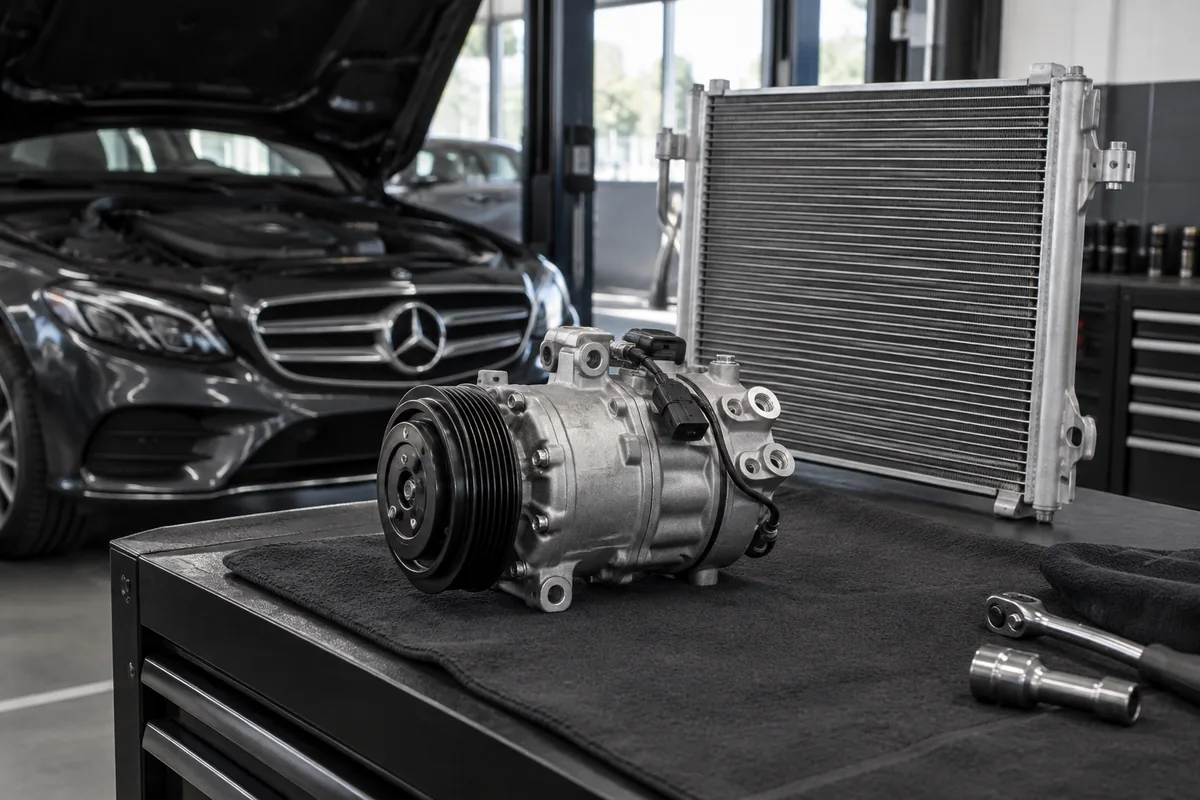
Recognize the problem
The compressor circulates and pressurizes refrigerant. Before replacing it, the inspection must separate a mechanical fault from low refrigerant, poor airflow, or a missing control signal. The checks compare refrigerant charge, airflow, compressor command, pressure response, and mechanical condition before a replacement decision.
A leak, incorrect charge, control fault, or weak compressor can all reduce cooling.
Check charge condition, pressure response, and compressor command together.
Condenser airflow or fan operation may be involved. A compressor is not the automatic fix.
Reproduce the fault at idle and inspect fan operation before choosing parts.
The compressor, pulley, belt tensioner, or another driven accessory may be responsible.
Locate the noise and inspect the drive. Internal damage changes the repair plan.
Know the fitted cost
Compare the complete repair, not just the compressor in a box. These are planning estimates in AED, including the listed work and 5% VAT, not fixed quotations.
| Work required | Estimated total and conditions |
|---|---|
| Initial cooling assessment | 200–350Cooling, accessible system checks, relevant pressures and electronic data. Refrigerant and extended fault tracing are separate. |
| A serviceable clutch or external drive repair | 500–1,200One accessible, separately replaceable clutch or drive component with fitting and checks. No internal damage; circuit remains closed. Not available on every compressor. |
| New conventional compressor fitted | 2,200–4,500Compatible quality replacement unit, seals, fitting, oil adjustment, R134a service, and final checks. Assumes no major circuit contamination. |
| Compressor with contamination repair | 4,000–6,500+Example allowance for a conventional compressor, condenser/drier work and cleaning of suitable circuit sections. Additional damaged parts or complex systems can exceed this. |
A separately booked assessment is not automatically credited against the repair. Genuine Mercedes-Benz parts, R1234yf, difficult access, larger refrigerant charges, and additional faults change the total. Hybrid and EV electric compressors are quoted individually.
Send the model, year, and cooling symptom. Mention a recent refill or previous compressor replacement. We can request the VIN when confirming the correct part.
Choose the work the fault needs
The condition of the compressor and the rest of the circuit determines the answer. Replacing a healthy compressor wastes money; replacing a damaged one without addressing contamination can lead to repeat failure.
Genuine or matched supplier unit
Compare the exact part number, manufacturer, condition, and written warranty. “OEM” alone does not identify which compressor is being supplied.
Remanufactured or used unit
A remanufactured unit needs a defined rebuild and test record. A used compressor has unknown remaining life. Ask about availability and repeat fitting or recharge costs if it fails.
Find the cause before ordering
Our inspection combines Star diagnostic information with AC measurements. A fault code, a spinning pulley, or one pressure reading is not a complete diagnosis.
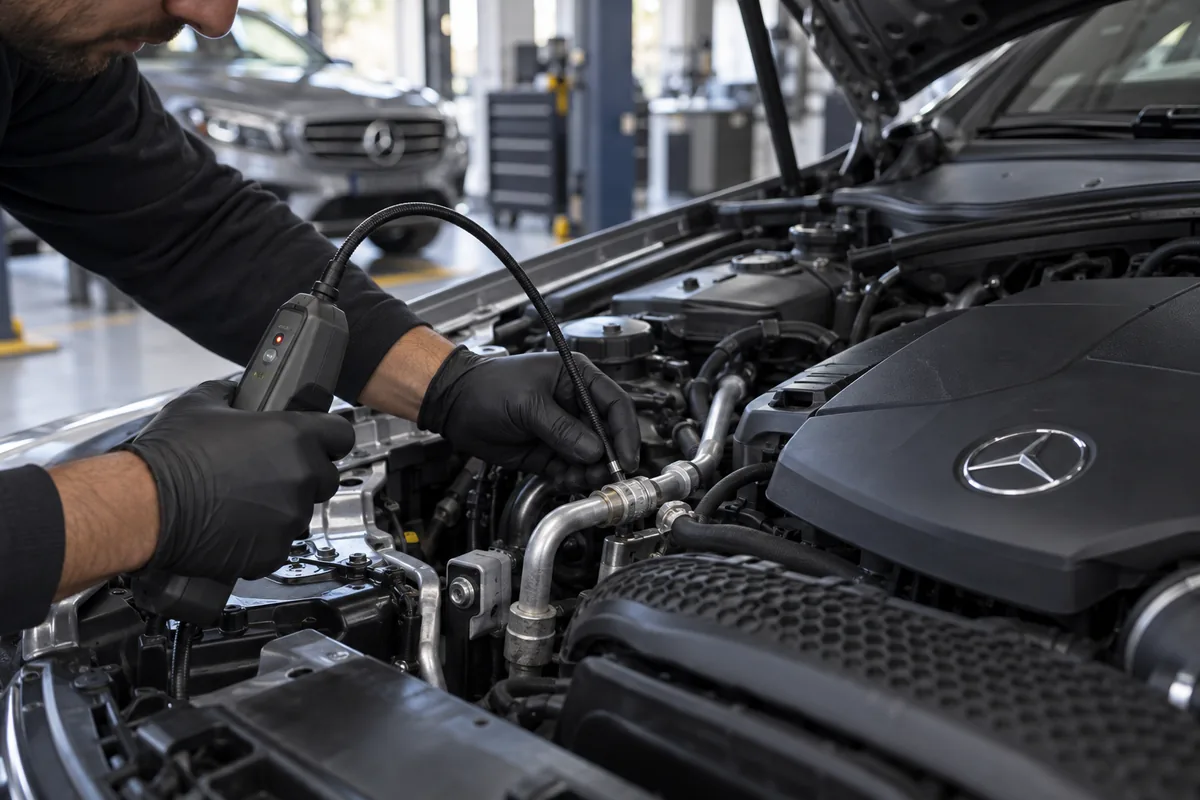
From diagnosis to cold-air checks
For a straightforward conventional system, allow about one working day after approval and parts arrival. Contamination, difficult access, or sourcing can extend the work to two or three days or longer.
Confirm the failed part, replacement choice, refrigerant, associated work, estimated collection time, and written warranty terms.
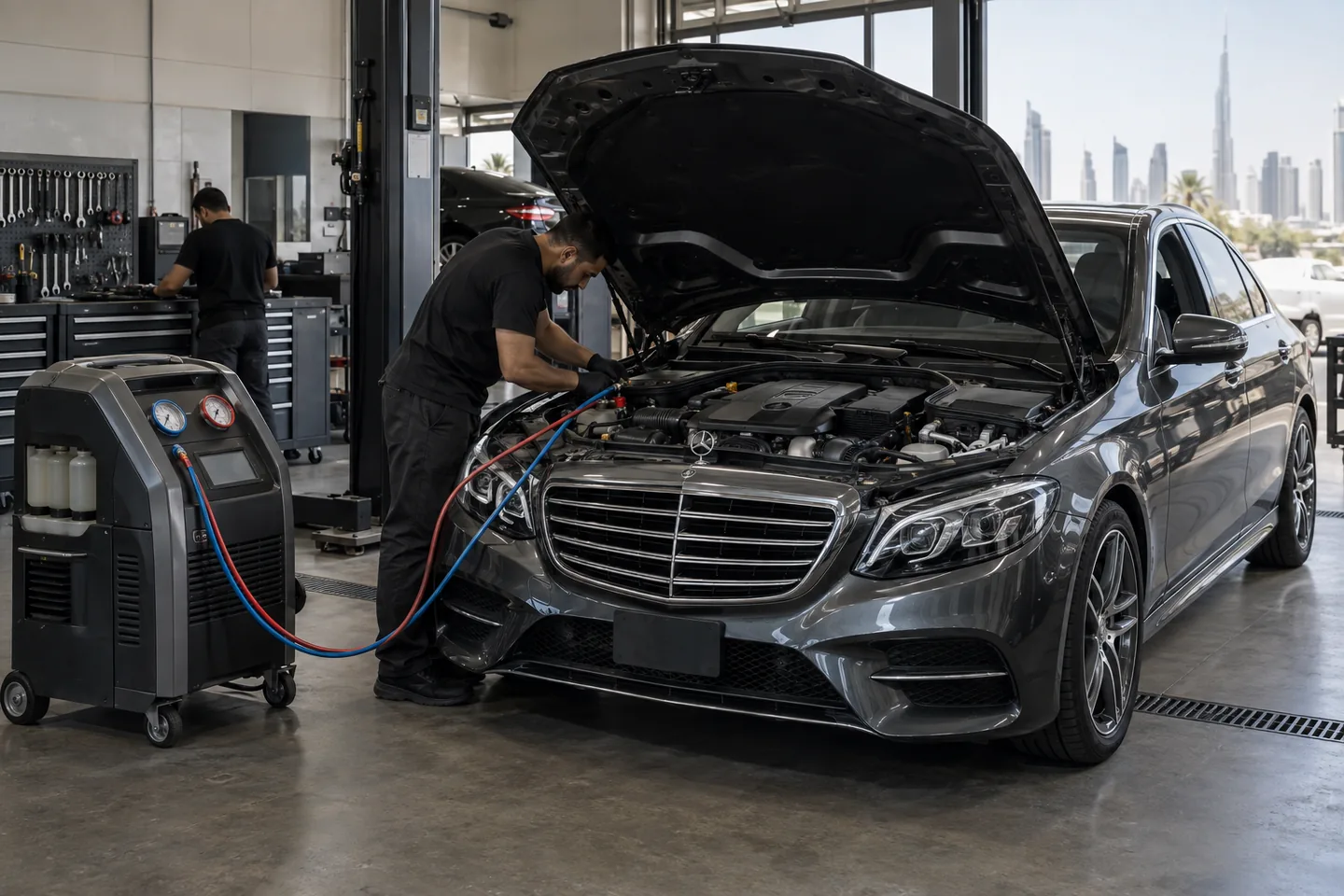
Recover refrigerant with suitable equipment. Inspect the removed unit and circuit condition, then explain any additional cleaning or replacement needed.
Install the matched unit and required seals or drier components. Follow the vehicle and compressor instructions for oil quantity, evacuation, and refrigerant charge.
Check for leaks, abnormal noise, pressure response, and cooling under relevant conditions. Recheck idle performance if that was the original concern.
Flushing is not a single treatment for every component. Compressors, driers, and expansion devices are not flushed as if they were open pipework. The contamination level and manufacturer procedure determine which components are replaced and which circuit sections can be cleaned.
Different faults, different bills
These hypothetical examples are not completed customer jobs. Each assumes a compatible conventional R134a system. Totals include the stated work and 5% VAT; diagnosis must confirm the proposed repair.
Complaint: Cooling stopped with noise near the compressor pulley. Inspect the belt drive and confirm that the compressor remains mechanically sound.
Assumed work: One separately available external drive component, fitting, and operation checks. The circuit stays closed. Internal failure or an unavailable repair part requires a different quote.
Complaint: Warm air despite the correct refrigerant charge. Confirm poor pumping response with the relevant command and electrical checks.
Assumed work: New quality replacement compressor, seals, fitting, oil adjustment, R134a service, and leak and cooling tests. No major contamination or additional failed component.
Complaint: Compressor noise followed by lost cooling. Inspect for internal damage and debris before confirming the wider work.
Assumed work: New quality replacement compressor, condenser with applicable drier provision, seals, suitable circuit cleaning, oil, R134a service, and final checks. Further damaged parts are separate.
The examples do not promise a warranty duration. Parts coverage, labor coverage, exclusions, and any mileage limit must be recorded for the selected repair.
Compatibility before cost
A C-Class, E-Class, S-Class, or SUV badge is not enough to select a compressor. Build specification, engine, refrigerant, and climate equipment can change both the part and the fitting work.
Check the mounting, pulley, control arrangement, and compressor reference. Not every Mercedes uses a replaceable clutch.
Use the vehicle’s specified refrigerant and charge quantity. These gases are not interchangeable; the price must identify which service is included.
An electric compressor needs the correct electrical safety procedure, equipment, and specified oil. Conventional compressor prices do not apply.
Additional cooling circuits can change charge quantity and fault tracing. Tell us whether the front, rear, or both areas lose cooling.
If the fault is weak airflow or uneven cabin temperature rather than the compressor, our Mercedes AC repair service covers the broader assessment.
After the repair
A proper handover connects the invoice to the work on your Mercedes. It should identify the compressor, show the associated AC service, record the final checks, and separate any fault that remains outside the approved repair.
These details make it easier to understand the bill, compare future advice, and return with accurate information if the same cooling or noise concern comes back.
If the compressor followed repeated refills, the record also separates the new unit from any leak, airflow, or electrical problem. It shows which parts and circuit work were included in the approved repair.
Record the manufacturer, condition, and part reference. The invoice should state whether the unit is new, remanufactured, or used.
Check the refrigerant type, charge service, specified oil, and connection seals. Electric compressors require the correct compatible oil and procedure.
List any drier, condenser, valve, seal, or cleaning work included. If contamination was found, note what was replaced and what suitable circuit sections were cleaned.
Record the leak result, pressure response, abnormal-noise check, and cooling performance under the conditions that reproduced the original complaint.
Keep the applicable parts and labor terms, exclusions, and any time or mileage limit for the selected repair with the final invoice.
A separate leak, fan problem, control fault, or electrical issue that was not part of the approved work should be written clearly for future diagnosis.
A colder vent alone does not prove every reported issue has been resolved. Check the condition that brought the car in.
The quotation and invoice should distinguish the compressor work from any remaining leak, fan, airflow, or control-system problem. This prevents a later diagnosis from treating every cooling concern as another compressor failure.
Report renewed noise, a burning smell, intermittent operation, or fading cooling promptly. Bring the invoice and written findings so the fitted part, original checks, and any excluded work can be reviewed together.
Before you approve the repair
Clear answers about related parts, repair alternatives, and the final checks.
No. A recharge can correct the specified refrigerant charge after suitable checks, but it cannot repair mechanical wear, a seized compressor, or a control fault. If cooling improved only briefly after a refill, tell us so the inspection can address the leak or other cause.
Not for every compressor fault. Internal debris, a blocked component, or a condenser design that cannot be cleaned effectively can make replacement necessary. The inspection and manufacturer procedure determine the requirement; the quote should explain it.
Sometimes. The component must be separately serviceable and the compressor must remain mechanically sound. Some compressors have no electromagnetic clutch. Replacing a valve or clutch without identifying the underlying fault can leave the cooling problem unresolved.
It requires refrigerant recovery and charging equipment, the correct oil and charge specifications, and checks for contamination. Electric compressors add high-voltage hazards. Arrange workshop service rather than opening the refrigerant circuit or testing high-voltage connections yourself.
That depends on the compressor and vehicle. Do not assume every replacement needs coding, or that clearing a fault code completes the job. The estimate should identify any vehicle-specific initialization, calibration, or fault-guided procedure that is actually required.
A remaining leak, wrong charge or oil, poor condenser airflow, unresolved control fault, or contamination can affect the result. Return with the invoice and explain when cooling fades. It needs diagnosis rather than an automatic second compressor.
Yes. Your model, year, and symptoms are enough to begin the conversation and discuss a planning range. The VIN or existing part reference may be needed before confirming the replacement unit and final fitted quotation.
Review the supplied compressor, associated work, refrigerant service, and written warranty. Ask how the original complaint was rechecked, including idle cooling or noise where relevant. Keep any advice about a separate unresolved fault with the invoice.